
[**Also, look at Spurgeon’s reflections on church music.]
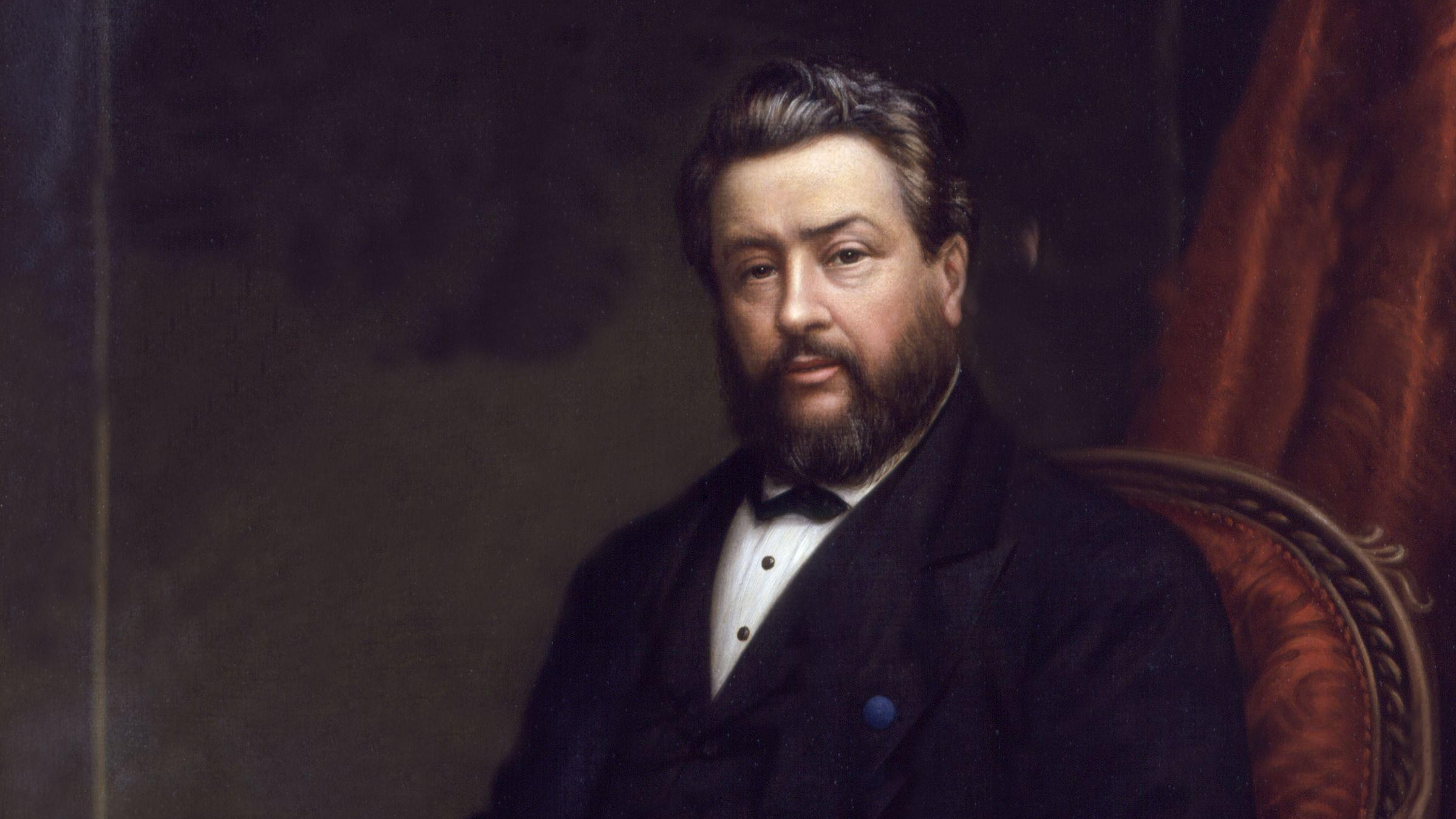
Charles Spurgeon is one of the most influential Baptist preachers ever and continues to be. He is titled by his admirers as being the “prince of preachers.” The staunch stance that most Baptists make today about baptism is contrasting to the teachings of past Baptists especially that of Spurgeon. Many today are appalled by anyone claiming that baptism is essential yet Spurgeon did. Baptists today have their position on baptism as not being essential to salvation like Charles Stanley and Ray Comfort with Kirk Cameron. On October 13, 1889, Charles Spurgeon said in his lesson “He that Believes and is Baptized shall be Saved” addressing the common discussion about baptism being essential,
“What do you mean by ‘nonessential’? ‘I mean that I can be saved without being baptized.’ Will you dare to say that wicked sentence over again? ‘I mean that I can be saved without being baptized.’ You mean creature! So you will do nothing that Christ commands, if you can be saved without doing it? You are hardly worth saving at all! A man who always wants to be paid for what he does, whose one idea of religion is that he will do what is essential to his own salvation, only cares to save his own skin, and Christ may go where he likes. Clearly, you are no servant of his; you need to be saved from such a disreputable, miserable state of mind; and may the Lord save you! Oftentimes, I do believe that this little matter of believers’ baptism is the test of the sincerity of our profession of love to him” (emp. added).
It is abundantly clear that Spurgeon thought that baptism was essential to salvation and essential to loving Christ. Some may wonder here, “Then, does Charles Spurgeon contradict his lesson on ‘Baptismal Regeneration’ for being a false teaching?” He does not. His lesson on Baptismal Regeneration was dealing with the teachings of the Church of England and no other churches. Spurgeon says clearly in his famous lesson on “Baptismal Regeneration” (June 5, 1864),
“I am not aware that any Protestant Church in England teaches the doctrine of baptismal regeneration except one, and that happens to be the corporation which with none too much humility calls itself the Church of England. This very powerful sect does not teach this doctrine merely through a section of its ministers, who might charitably be considered as evil branches of the vine, but it openly, boldly, and plainly declares this doctrine in her own appointed standard, the Book of Common Prayer, and that in words so express, that while language is the channel of conveying intelligible sense, no process short of violent wresting from their plain meaning can ever make them say anything else” (emp. added).
What was Spurgeon referring to by “Baptismal Regeneration”?! Spurgeon refuted the practice of baptizing unbelievers and specifically the baptizing of infants. In the same lesson, Spurgeon said,
“I find that the great error which we have to contend with throughout England (and it is growing more and more), is one in direct opposition to my text, well known to you as the doctrine of baptismal regeneration. We will confront this dogma with the assertion, that BAPTISM WITHOUT FAITH SAVES NO ONE. The text says, ‘He that believeth and is baptized shall be saved;’ but whether a man be baptized or no, it asserts that ‘he that believeth not shall be damned:’ so that baptism does not save the unbeliever, nay, it does not in any degree exempt him from the common doom of all the ungodly” (emp. added).
Spurgeon was addressing the teaching and practice of the Church of England to baptize infants, unbelievers. This is why he addressed “baptism without faith” as “baptismal regeneration,” because the Church of England was baptizing unbelievers, who were to be saved without faith and essentially no understanding of the Gospel. Spurgeon was right that baptizing unbelievers is not in the Bible and not taught by Jesus. Baptizing little children contradicts the words of Jesus (Mark 16:16; cf. Matt 19:14). Spurgeon was not addressing those who believed that baptism was the faithful moment of regeneration (1 Cor 6:11; Titus 3:5; cf. John 3:5).
Now, Spurgeon emphasized faith, and faith being essential to salvation. Many today especially Baptists separate faith from baptism being essential to salvation. Spurgeon did not. Charles Spurgeon showed that that faith and baptism are connected. Referring to Jesus’ words on baptism in Mark 16:16, Spurgeon said in his lesson on “Baptismal Regeneration,”
“THE BAPTISM IN THE TEXT IS ONE EVIDENTLY CONNECTED WITH FAITH. ‘He that believeth and is baptized shall be saved.’ It strikes me, there is no supposition here, that anybody would be baptized who did not believe; or, if there be such a supposition, it is very clearly laid down that his baptism will be of no use to him, for he will be damned, baptized or not, unless he believes. The baptism of the text seems to me—my brethren, if you differ from me I am sorry for it, but I must hold my opinion and out with it—it seems to me that baptism is connected with, nay, directly follows belief. I would not insist too much upon the order of the words, but for other reasons, I think that baptism should follow believing” (emp. added).
Now, some might still want to avoid baptism in Spurgeon’s statement without its context, which Spurgeon stated, “The text says, ‘He that believeth and is baptized shall be saved;’ but whether a man be baptized or no, it asserts that ‘he that believeth not shall be damned’.” Spurgeon is certainly not contradicting his words here from before about baptism being essential, nor was Jesus for that matter. He is quoting the words of Christ from Mark 16:16, “He that believeth and is baptized shall be saved; but he that believeth not shall be damned.”
In response to those who want to leave out baptism from salvation, Spurgeon responds to them clearly in his lesson “He that Believeth and is Baptized Shall be Saved” (October 13, 1889) saying,
“Please observe that I did not make the text. Perhaps, if I had made it, I should have left out that piece about baptism; but I have had no hand in making the Bible, I am obliged to take God’s Word as I find it, and here I read these words of our Lord Jesus Christ, ‘He that believeth and is baptized shall be saved.’ ‘Do not dwell on the baptism,’ says one; ‘leave that out.’ That is what you say, my dear Sir; I cannot see your face, but I do not believe that you are my master. My Master is the Lord who taught holy men to write this Book, and I can only go by the Book; the Book has the baptism in it, so I must stick to the truth as it is in the Book: ‘He that believeth and is baptized shall be saved.’” (emp. added).
Spurgeon’s belief in baptism for salvation cannot be any clearer. Despite the clear teachings of Christ regarding the necessity of the baptism to salvation, some will boldly proclaim that they need not obey baptism to be saved. Some say that all they need is faith. See what Spurgeon said in response to this from his lesson “Baptismal Regeneration.”
“Again, baptism is also Faith’s taking her proper place. It is, or should be one of her first acts of obedience. Reason looks at baptism, and says, ‘Perhaps there is nothing in it; it cannot do me any good.’ ‘True,’ says Faith, ‘and therefore will I observe it. If it did me some good my selfishness would make me do it, but inasmuch as to my sense there is no good in it, since I am bidden by my Lord thus to fulfil all righteousness, it is my first public declaration that a thing which looks to be unreasonable and seems to be unprofitable, being commanded by God, is law, is law to me.”
Why do so many especially Baptists today cast aside baptism in Jesus’ name as not being necessary and even unnecessary and unreasonable? It is clear that it is the end result of accepting faith alone, which is to assume that baptism is a work of law and boasting rather than a work of faith and being the exact moment of acting faith when Jesus saves. To see Spurgeon’s confusion in dealing with the Baptismal Regeneration and combating the flawed teachings of the Church of England, Spurgeon puts salvation before being buried and raised with Christ as seen in reading his other words from his lesson on “Baptismal Regeneration,”
“At any rate it effectually avoids the error we have been combating. A man who knows that he is saved by believing in Christ does not, when he is baptized, lift his baptism into a saving ordinance. In fact, he is the very best protester against that mistake, because he holds that he has no right to be baptized until he is saved. He bears a testimony against baptismal regeneration in his being baptized as professedly an already regenerate person. Brethren, the baptism here meant is a baptism connected with faith, and to this baptism I will admit there is very much ascribed in Scripture. Into that question I am not going; but I do find some very remarkable passages in which baptism is spoken of very strongly. I find this—‘Arise, and be baptized, and wash away thy sins, calling on the name of the Lord.’ I find as much as this elsewhere; I know that believer’s baptism itself does not wash away sin, yet it is so the outward sign and emblem of it to the believer, that the thing visible may be described as the thing signified. Just as our Saviour said—‘This is my body,’ when it was not his body, but bread; yet, inasmuch as it represented his body, it was fair and right according to the usage of language to say, ‘Take, eat, this is my body.’ And so, inasmuch as baptism to the believer representeth the washing of sin—it may be called the washing of sin—not that it is so, but that it is to saved souls the outward symbol and representation of what is done by the power of the Holy Spirit, in the man who believes in Christ.”
Here we see the common Baptist belief that survives to this day that the Holy Spirit changes the unbelieving man’s heart to believe. Where is this belief in the Scriptures? Ir cannot be found. Also, for Baptists and even Spurgeon, one’s initial belief is the time of one’s regeneration, or in other words, the exact moment of salvation. See, Spurgeon was right that someone cannot be saved at baptism being a unbeliever because it is not possible to be saved without faith; and on the other hand, Spurgeon is wrong to believe that believers are not saved when rising with Christ from baptism because he believed that they were already saved in believing and had received the Holy Spirit. This is why Spurgeon rejects baptism and why Baptists are generally confused about Jesus’s words in Mark 16:16, because they have already decided that salvation is when one first believes rather than when faith comes to conformation of the Gospel. Though grace is a free gift, we must still faithfully be buried with Christ through baptism. For which, we do not baptize ourselves but someone else immerses us.
How again does Spurgeon differ in belief from Baptists today? Spurgeon believes that baptism is essential to salvation, which is different. Yet, Spurgeon is in agreement with today’s Baptists that baptism is not the moment of regeneration and salvation. There are a few professing to be Christian including Baptists who also believe like Spurgeon today, but these are certainly few. To consider for yourself, whether one is saved at belief or at the faithful act of baptism, read some Scriptures on baptism like Mark 16:16; Acts 2:38; Acts 22:16; Rom 6:3–7; 1 Cor 6:11; Gal 3:26–27; Col 2:12–13; and 1 Pet 3:21. Remember that John’s baptism is different from the baptism that Jesus commanded (Acts 19:1–7).
Are we saved by the death, burial, and resurrection of Jesus Christ? Yes (1 Cor 15:1–4). Are we saved when we are born again through the resurrection of Jesus Christ? Yes (1 Pet 1:3). Are we saved when we baptized through the resurrection? Yes (1 Pet 3:21). See, God raising a believer with Christ from the burial of baptism is not out of our own works (Eph 2:4–9).
The top of our understanding of the being raised with Christ from being buried with Him in baptism. Spurgeon has very clear and truthful statements regarding the obedience to the Gospel by baptism in Romans 6:3–7. In Spurgeon’s lesson, “Baptism – A Burial” (October 30, 1881), he had these things to say to show how baptism is essential to salvation,
“Baptism sets forth the death, burial, and resurrection of Christ, and our participation therein. Its teaching is twofold. First, think of our representative union with Christ, so that when he died and was buried it was on our behalf, and we were thus buried with him. This will give you the teaching of baptism so far as it sets forth a creed. We declare in baptism that we believe in the death of Jesus, and desire to partake in all the merit of it. But there is a second equally important matter and that is our realized union with Christ which is set forth in baptism, not so much as a doctrine of our creed as a matter of our experience. There is a manner of dying, of being buried, of rising, and of living in Christ which must be displayed in each one of us if we are indeed members of the body of Christ.”
“First, then, I want you to think of OUR REPRESENTATIVE UNION WITH CHRIST as it is set forth in baptism as a truth to be believed. Our Lord Jesus is the substitute for his people, and when he died it was on their behalf and in their stead. The great doctrine of our justification lies in this, that Christ took our sins, stood in our place, and as our surety suffered, and bled, and died, thus presenting on our behalf a sacrifice for sin. We are to regard him, not as a private person, but as our representative. We are buried with him in baptism unto death to show that we accept him as being for us dead and buried.”
“His death is the hinge of our confidence: we are not baptized into his example, or his life, but into his death. We hereby confess that all our salvation lies in the death of Jesus, which death we accept as having been incurred on our account.”
 The Breath of God
Hmmm, so salvation isn’t by grace alone, but it’s actually grace+.
So would that mean that some of the brilliant theologians that I respect like R.C. Sproul, who happen to be paedobaptists, aren’t saved, since they failed to be baptized after belief?
Did he fail to believe Jesus, “Whoever believes and is baptized is saved” (Mark 16:16, cf. Matt. 28:19-20, 1 Pet. 1:22-23, Heb. 5:9, Matt. 7:21, etc.)?
Salvation is by grace, by the death, burial, and resurrection of Christ, and cannot exclude these works of Christ (1 Cor. 15:1-4). “[E]ven when we were dead in trespasses, made us alive together with Christ (by grace you have been saved), and raised us up together, and made us sit together in the heavenly places in Christ Jesus,” (Eph. 2:5-6).
“[A]nd be found in Him, not having my own righteousness, which is from the law, but that which is through faith in Christ, the righteousness which is from God by faith; that I may know Him and the power of His resurrection, and the fellowship of His sufferings, being conformed to His death, if, by any means, I may attain to the resurrection from the dead” (Phil. 3:9-11).
“[B]uried with Him in baptism, in which you also were raised with Him through faith in the working of God, who raised Him from the dead. And you, being dead in your trespasses and the uncircumcision of your flesh, He has made alive together with Him, having forgiven you all trespasses,” (Col. 2:12-13).
“Or do you not know that as many of us as were baptized into Christ Jesus were baptized into His death? Therefore we were buried with Him through baptism into death, that just as Christ was raised from the dead by the glory of the Father, even so we also should walk in newness of life. For if we have been united together in the likeness of His death, certainly we also shall be in the likeness of His resurrection, knowing this, that our old man was crucified with Him, that the body of sin might be done away with, that we should no longer be slaves of sin” (Rom. 6:3-6).
Who hath bewitched you!!!! Ye have fallen from Grace, and Mercy
Please pray and ask God to reveal what Grace is and Ephesians 2:8,9!!!!
Any act you have to do is a work!!!!!! simple English!!!! Stop being a Pharisee as they boasted in their works and not Grace!!!!
In the same of Jesus Christ, I plead with you to at least read your Bible (Matt. 7:21, Heb. 5:8-9, 1 Pet. 1:22-23). Certainly, faith without works is dead (Jas. 2:26), incomplete (Jas. 2:22), and one is justified “not by faith alone” (Jas. 2:24)!
Did Jesus not ask about John’s baptism being from heaven? Jesus commanded baptism for salvation (Mark 16:16). Are Christ’s commands not a part of grace? Did not the Pharisees give up faith in Christ’s commands to to reject John’s baptism too (Luke 20:1-8), justify corban to not support their needy parents (Mark 7:11), and justify divorce and remarriage for any reason (Matt. 19)? Are not those who divorce and marry another are committing adultery and those who marry the divorce are committing adultery (Matt. 19:9, Mark 10:, Luke 16:18)? Should we consent to Pharisee-ism that to boast in a work of declaring “grace” over Christ’s commands or are the two not related?
Bewitched? “O foolish Galatians! Who has bewitched you that you should not obey the truth, before whose eyes Jesus Christ was clearly portrayed among you as crucified? This only I want to learn from you: Did you receive the Spirit by the works of the law, or by the report of faith?” (Gal. 3:1-2).
“Where is boasting then? It is excluded. By what law? Of works? No, but by the law of faith. Therefore we conclude that a man is justified by faith apart from the deeds of the law” (Rom. 2:27-28). “What law?” with deeds? “But now the righteousness of God apart from the law is revealed, being witnessed by the Law and the Prophets, even the righteousness of God, through faith in Jesus Christ, to all and on all who believe” (Rom. 3:21-22). Did this exclude obedience to the faith? Rom. 1:5 (16:25), “obedience to the faith among all nations for His name”. Rom. 6:1-2, “What shall we say then? Shall we continue in sin that grace may abound? Certainly not! How shall we who died to sin live any longer in it?” Rom. 6:12-14, “Therefore do not let sin reign in your mortal body, that you should obey it in its lusts. And do not present your members as instruments of unrighteousness to sin, but present yourselves to God as being alive from the dead, and your members as instruments of righteousness to God. For sin shall not have dominion over you, for you are not under law but under grace.” Should we obey this faith?
Should we glory and boast in keeping the 10 commandments? Do you not that Christians are not under the Law of Moses with the 10 commandments? We are under the Law of Christ with like commands in love (Rom. 13:9, cf. Gal. 3:10-29). “But if the ministry of death, written and engraved on stones, was glorious, so that the children of Israel could not look steadily at the face of Moses because of the glory of his countenance, which glory was passing away, how will the ministry of the Spirit not be more glorious?” (2 Cor. 3:7-8).
“Being baptized in Jesus’ name is the essential to salvation because it is a part of the Gospel by which we are saved (Rom. 1:16)”
I checked Romans 1:16 and it does not say baptism is part of the gospel. Paul himself says that God sent him not to baptize but to preach the gospel (I Corinthians 1:14-17). This means baptism is not part of the salvation process since its by the gospel we are saved.
Yet, in 1 Corinthians 1, Paul still baptized because baptism is essential to the Gospel. If you keep all the Scriptures in the context of my words, you’d see that Romans 16:16 shows that the power of God unto salvation is the Gospel. First Corinthians 15 says that this Gospel is where we stand and are saved being preached, which is the death, burial, and resurrection of Jesus Christ. This Gospel must be obeyed (2 Thess. 1:7-9, Hebrews 5:8-9). Romans 6 and Colossians 2 make it very clear that obeying the Gospel is to die to your sins, be buried in baptism, and be resurrected into the new life. Please become very familiar with these and do not disregard any word of Christ. Realize that baptism is not a work since no baptizes oneself.
Take care.
Hey Steve,
I believe as honest believers then we are also willing reconsider our understanding for the Gospel of Christ. With this, I had to reopen by eyes to the Scriptures and take Christ’s interpretation of the Scriptures.
The thief died on the cross was before Jesus established baptism in His name (Matt. 28:19, Mark 16:16, Acts 2:38, 22:16). Also, it is speculation to say that the thief on the cross had not been baptized by the baptism of repentance. Add to this that the thief was on the cross before the New Testament was established by Christ’s death (Heb. 9:16). There is a difference between the baptism of John and that of Jesus (Acts 19:1-6).
I’m going to have go with Jesus who said “He who believes and is baptized will be saved; but he who does not believe will be condemned” (Mark 16:16). This is the baptism “in the name of the Son” (Matt. 28:19), which Acts 10:47 and 48 shows that this baptism is in water.
One has to obey the Gospel to be saved (1 Cor. 15:1-4, 2 Thess. 1:7-9). You cannot just believe. Even the demons believe (James 2:19). Jesus is the author of salvation to those who obey (Heb. 5:8-9), and he said be baptized.
Being baptized in Jesus’ name is the essential to salvation because it is a part of the Gospel by which we are saved (Rom. 1:16). We have to obey the Gospel to be saved (2 Thess. 1:7-9). This is obedience to the Gospel, which is the death, burial, and resurrection (1 Cor. 15:1-4). The Scriptures teach that we must die to our sins (repent), be buried in immersion, and be resurrected in a new life (Rom. 6:1-6, Col. 2:12-13). We approach the Gospel by faith and confession of faith (Rom. 10:9-10).
The baptism of the Holy Spirit was only received by a few (Luke 24:46-49, Acts 1:5, 8, 11:15-16) being the Apostles (Acts 2), Cornelius’ house (Acts 10), and the Apostle Paul (2 Tim. 1:6). If baptism of the Holy Spirit was for everyone, then the Apostles would not have to have laid hands on people who were not baptized by the Spirit (Acts 8:14-17, 19:1-6, 2 Tim. 1:6). Holy Spirit baptism was not received by all like baptism in Jesus’ name nor was it immediately after conversion as with the Apostles. The baptism of the Holy Spirit only gave miraculous gifts not salvation.
Lastly, the indwelling of the Spirit is essential to salvation (Rom. 8:9-11). Only those were baptized became children of God (Gal. 3:26-29). We lack faith in Christ that he who seeks will find if someone can die before being baptized.
See more here:
https://godsbreath.wordpress.com/2007/04/30/the-exact-moment-of-salvation/
May God bless us all.
I believe that the baptism of the Holy Spirit is most important. We should be emmersed in the Holy Spirit. If a person were to accwpt Christ and were unable to be baptized, would they be damned? The theif on the cross was not baptized by water but by the Jesus through salvation. Did the theif go to hell? No. If your not saved when you go into the water you will not be saved when you come out, but I do have a concearn for someone who says they have accepted Christ, and are not willing to be baptized.
Wow, all I can say is wow. Don’t think I’ve ever seen someone’s views as distorted as you’ve made Spurgeons. Just type in Spurgeon baptism on google. One of the links will take you to a message he did on June 5, 1864 entitled “Baptismal Regeneration”. He repudiates baptismal regeneration with every paragraph.
Please, don’t make an assertion, but present your premises, or I’ll remove your comments.
Spurgeon’s views are certainly distorted. His heart is presented by his words. Sure, Spurgeon refutes Baptismal Regeneration, yet what Jesus taught about baptism is that believers are regenerated at baptism.
See http://www.searchingfortruth.org/.