
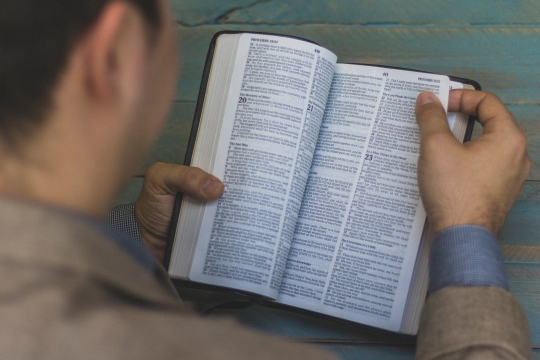
Are the Scriptures and the Word of God two different things? There are those that believe that the two are absolutely the same and then there are those who believe that the two are very different. Maybe part of the disagreement has to do with there being no passage of Scripture that explicitly says “the Scriptures are the Word of God” or “the Word of God is the Scriptures.” At the same time, there is no Scripture that makes a distinction between the Word and the Scripture.
God’s Word and the Scriptures
Is there a difference between the Scriptures and the Word of God? Here are the Scriptures that demonstrate the unity of the Word and the Scriptures:
(1) First, Jesus identified the “the Word of God” as “Scripture” and “written in your Law,” and He also noted that “Scripture cannot be broken” (John 10:34–35). Jesus’s word demonstrate that the Word and the Scripture are essentially the same. However, the only difference between the Word and the Scripture is that the Scripture is written and the Word is either written or spoken.
(2) Jesus is the Word (1 John 1:1–4). The Word and the Gospel are the same (Eph 1:13). By that Gospel, we are saved being that the Gospel is the power of God unto salvation (Rom 1:16; 1 Cor 1:18, 15:1–4). That inspired writers recorded the Gospel message in the Scriptures. The Word is in the Scriptures (1 John 1:1–4; Rev 1:2–3).
(3) In 1 Corinthians 14:36–37, the Word of God is clearly the message being taught concerning matters of decency and order in the assembly. That message contained the written commands as Paul revealed, “I am writing to you are a command of the Lord.” In the next chapter of 1 Corinthian 15:1–4, Paul noted “the Gospel” being “that Word” that he preached “according to the Scriptures.” The Word is written. “Write” is the Greek word grapho, which is the verb form of Scripture, graphei. John also plainly stated that the Apostles wrote “concerning the Word of Life” (1 John 1:1–4). John confirmed that Revelation is the written Word of God that one reads (Rev 1:2–3).
(4) Peter revealed that “we,” John and himself, have the “word of prophecy,” and he wrote generally of “prophecy of Scripture” in reference to Scripture written by “we” who are John and Peter excluding the martyred James (2 Pet 1:19–21). Scripture is the written Word. Peter spoke of the wisdom given to Paul, which is the Word that Paul wrote in his letters, which are Scripture (2 Pet 3:15–16).
(5) The Word of God is also called the mystery that came by revelation (Col 1:25–26). Paul wrote so that those who read would know the mystery of Christ (Eph 3:3–4). Again, the Word is written as revealed Scripture.
(6) Jesus referred to the Scriptures as “the commandment of God” that the Pharisees rejected, and He referred to the Scriptures as “you have made void the word of God” (Matt 15:3–9; Mark 7:6–13).
(7) Jesus declared to Satan, “It is written, ‘Man shall not live by bread alone, but by every word that comes from the mouth of God.'” (Matt 4:4; cf. Deut 8:3). Where are the words that come from the breath of God? Jesus quoted Scripture as the source. Furthermore, the apostle Paul revealed that the Scriptures are God’s breath or God-breathed. Paul declared, “Every Scripture is God’s breath and is profitable for teaching, for reproof, for correction, for instruction which is in righteousness. That the person of God would be complete, furnished completely unto every good work” (2 Tim 3:16–17).
There is no difference in message between the Word and the Scriptures, because the Scriptures are simply the written Word of God. There is a slight difference between the Word and the Scriptures.
The Word Spoken and Written
There is a good parallel for this conclusion. This parallel is as a preacher writes a complete manuscript of his message before or after preaching, and the message that he preaches is more than the manuscript. What is the difference between this man’s word and his manuscript? There is no difference in message except the manuscript is the written message that he preaches. Likewise, the Word is not bound to the page, but the Scriptures are the only source of the written Word.
The Word is the Flesh and on the Paper
The Word is not bound to the written page as even the Word came in the flesh (John 1:14). The Word and the Scriptures are as complete as each other. As Jesus is fully God and fully human in the flesh so are the Scriptures fully God’s Word and fully human.Writings are written to present a message, and the Scriptures are sacred “writings” guided in writing by Christ’s Spirit. For the Scriptures, the written message is the Word. Messages do not have to be written, but in this case, the Scriptures present no other message than the Word of God, and the Word of God is completely revealed in the Scriptures. Therefore, the Scriptures are the written Word, and the Word is found in the inspired writings — the Scriptures.
 The Breath of God
Shalom!! I really believe that the word of God is different from scriptures.
Jesus is the word of God whiles the scriptures talks about Him the word of God. John 5:39
YOU got it Right!BINGO!
Reblogged this on Seeing God's Breath and commented:
This is still true. God’s Word is found within the Scriptures.
I believe they are two different things
THE WORD is SOMEONE
THE SRCIPTURE is SOMETHING
BRILLIANT! you hear GOD buddy,i am with you.with WORD there is now debate !with scripture there is…
I am so thankful to see a post on this subject. When I became convinced of this same thing back in 2005, my Bible college friends thoughts I was crazy. Maybe I just didn’t communicate my point with clarity. I’ve thought about this subject many, many times over the last five years, and today while reading the Bible I decided to Google it–mostly coming upon a lot of liberal-leaning perspectives.
Thank you for your perspective. If the topic comes up in discussion again, I’m going to definitely reference this post.
I’m glad that you could use it. I’m glad that someone outside my circle could use it.
Heb. 8:8ff
This is a fascinating discussion that I was just looking into. I feel that there is a clear distinction in the Holy Scriptures between the Word of God and the Scriptures. While the scriptures are God breathed inspired words, the scriptures are not God. The bible teaches us that he has magnified His Word above all His name. Not to mention the fact that the bible teaches us that the Word was with God and the Word was God. These kinds of statements could never be made of the scriptures.
While the scriptures are infallible and authoritative one never even needs to necessarily come in contact with them in order to be saved. But without the Word one could never be saved. For faith comes by hearing and hearing by the Word of God. We have through our way of throwing around terms without thought, lost the meaning of the Word of God.
*This is just an opinion as I am trying to find a deeper revelation on this topic.
i dont think you understood the explanation above, in any case there is no signifcant different between the word of God and the scripture. if read from John 10;35 you see what Jesus himelf said. making reference to psalm 82;6. infact most cases he uses both interchangably.
more importantly, we dont study the word to make arguement but to use what we have learn to take over the world for the king of the universe before he comes back. thank you
Michael,
I don’t understand your last two paragraphs. Let me clarify though that Jesus’ words are spirit and life whether written on our hearts or paper, or spoken aloud. The Holy Spirit can no way operate outside of the truth, God’s Word (John 17:17). This is His purpose to give the truth and thus transform us (John 14:26, 2 Cor. 3:18ff).
The Scriptures should be read literally when the Scriptures are literal and the Scriptures should be read figuratively when the words signify (hence “signified” in Revelation 1:1).
All are guilty of “legalism” in keeping the law of Christ to those who neglect it. It is extra-Biblical legalism that should be stressed. Let us build the house of God by His instructions. See https://godsbreath.wordpress.com/2009/09/08/a-look-into-the-house-of-god/.
To me it is important to recognize the difference between the Word of God and the Scriptures. John 1:1 tells us that the Word of God is God and was in the very beginning. Nothing was written on paper such as a scripture. Moreover, it is the very Scriptures we are talking about that make this key distinction. That is to say, the Scriptures tell us that the Word existed before the Scriptures.
The interpretation of the Greek word for the Word says nothing about a written form except that it, the Word, can be written but being written does not make it the Word.
In Chinese the Word is translated into the Tao or the Way. This helps me understand it better because I believe the Word is what God wants us to know. It is His Way and it has been around since the foundations of time. He reveals His Way to us corporately and individually, as he determines, through the Holy Spirit, and he uses Scriptures to do it, sometimes.
I do not offer this as an authority on the subject but as a follower of Christ who has come to understand this through practice. My conclusion has been to become wary of those who literally interpret the Bible or those who are legalistic in their application because both of these positions minimize the role of the Holy Spirit in bridging the gap between the Word and the Scriptures and God and us.
Comments?
I would say that we have different wording and kind of a different subject really. I was addressing those who oppose the Scriptures as the Word, which is what most of the self-titled “progressives” teach. Yes, the Word is “ever-portable” being written on our hearts. If the Word as I present can be found anywhere else, it is in the hearts and minds of Christians. I base this off the Scriptures showing that the New Testament is laws that are written on the hearts and minds of Christians (Jer. 31:31-34, Heb. 8:8-12, 10:16-17). I plan on writing about these laws later.
Well I definitely see what you’re saying. But isn’t the word of God written on our hearts? In essence, it’s almost as if the word of God is “ever-portable,” in that it naturally goes wherever we go. The scriptures are the written word of God that we can read and study. I don’t think it’s outrageous, liberal, and especially not unscriptural to say the two are different. I suppose maybe we’re saying the same thing with different wording.