
[**Also, look at Spurgeon’s reflections on church music.]
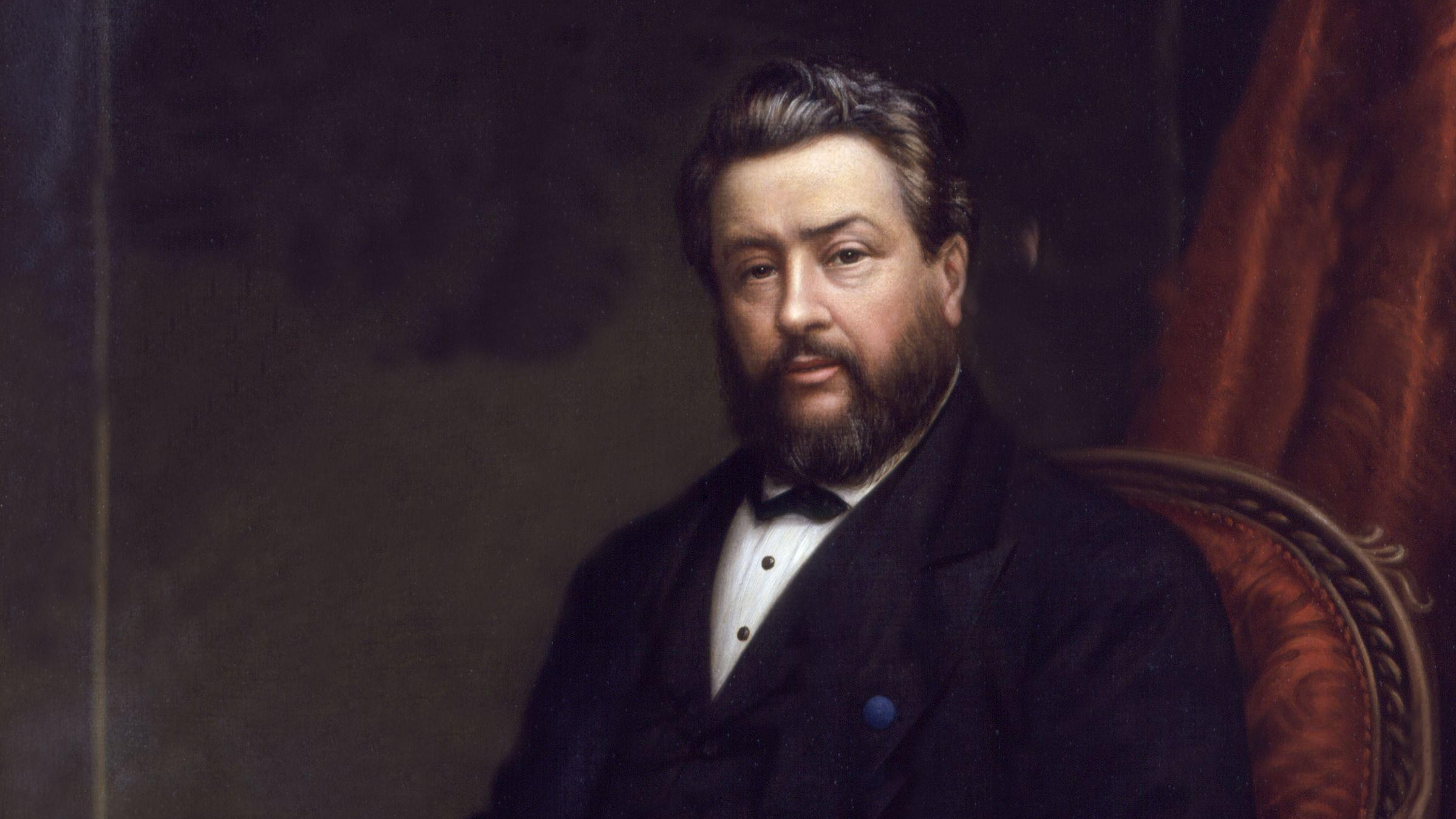
Charles Spurgeon is one of the most influential Baptist preachers ever and continues to be. He is titled by his admirers as being the “prince of preachers.” The staunch stance that most Baptists make today about baptism is contrasting to the teachings of past Baptists especially that of Spurgeon. Many today are appalled by anyone claiming that baptism is essential yet Spurgeon did. Baptists today have their position on baptism as not being essential to salvation like Charles Stanley and Ray Comfort with Kirk Cameron. On October 13, 1889, Charles Spurgeon said in his lesson “He that Believes and is Baptized shall be Saved” addressing the common discussion about baptism being essential,
“What do you mean by ‘nonessential’? ‘I mean that I can be saved without being baptized.’ Will you dare to say that wicked sentence over again? ‘I mean that I can be saved without being baptized.’ You mean creature! So you will do nothing that Christ commands, if you can be saved without doing it? You are hardly worth saving at all! A man who always wants to be paid for what he does, whose one idea of religion is that he will do what is essential to his own salvation, only cares to save his own skin, and Christ may go where he likes. Clearly, you are no servant of his; you need to be saved from such a disreputable, miserable state of mind; and may the Lord save you! Oftentimes, I do believe that this little matter of believers’ baptism is the test of the sincerity of our profession of love to him” (emp. added).
It is abundantly clear that Spurgeon thought that baptism was essential to salvation and essential to loving Christ. Some may wonder here, “Then, does Charles Spurgeon contradict his lesson on ‘Baptismal Regeneration’ for being a false teaching?” He does not. His lesson on Baptismal Regeneration was dealing with the teachings of the Church of England and no other churches. Spurgeon says clearly in his famous lesson on “Baptismal Regeneration” (June 5, 1864),
“I am not aware that any Protestant Church in England teaches the doctrine of baptismal regeneration except one, and that happens to be the corporation which with none too much humility calls itself the Church of England. This very powerful sect does not teach this doctrine merely through a section of its ministers, who might charitably be considered as evil branches of the vine, but it openly, boldly, and plainly declares this doctrine in her own appointed standard, the Book of Common Prayer, and that in words so express, that while language is the channel of conveying intelligible sense, no process short of violent wresting from their plain meaning can ever make them say anything else” (emp. added).
What was Spurgeon referring to by “Baptismal Regeneration”?! Spurgeon refuted the practice of baptizing unbelievers and specifically the baptizing of infants. In the same lesson, Spurgeon said,
“I find that the great error which we have to contend with throughout England (and it is growing more and more), is one in direct opposition to my text, well known to you as the doctrine of baptismal regeneration. We will confront this dogma with the assertion, that BAPTISM WITHOUT FAITH SAVES NO ONE. The text says, ‘He that believeth and is baptized shall be saved;’ but whether a man be baptized or no, it asserts that ‘he that believeth not shall be damned:’ so that baptism does not save the unbeliever, nay, it does not in any degree exempt him from the common doom of all the ungodly” (emp. added).
Spurgeon was addressing the teaching and practice of the Church of England to baptize infants, unbelievers. This is why he addressed “baptism without faith” as “baptismal regeneration,” because the Church of England was baptizing unbelievers, who were to be saved without faith and essentially no understanding of the Gospel. Spurgeon was right that baptizing unbelievers is not in the Bible and not taught by Jesus. Baptizing little children contradicts the words of Jesus (Mark 16:16; cf. Matt 19:14). Spurgeon was not addressing those who believed that baptism was the faithful moment of regeneration (1 Cor 6:11; Titus 3:5; cf. John 3:5).
Now, Spurgeon emphasized faith, and faith being essential to salvation. Many today especially Baptists separate faith from baptism being essential to salvation. Spurgeon did not. Charles Spurgeon showed that that faith and baptism are connected. Referring to Jesus’ words on baptism in Mark 16:16, Spurgeon said in his lesson on “Baptismal Regeneration,”
“THE BAPTISM IN THE TEXT IS ONE EVIDENTLY CONNECTED WITH FAITH. ‘He that believeth and is baptized shall be saved.’ It strikes me, there is no supposition here, that anybody would be baptized who did not believe; or, if there be such a supposition, it is very clearly laid down that his baptism will be of no use to him, for he will be damned, baptized or not, unless he believes. The baptism of the text seems to me—my brethren, if you differ from me I am sorry for it, but I must hold my opinion and out with it—it seems to me that baptism is connected with, nay, directly follows belief. I would not insist too much upon the order of the words, but for other reasons, I think that baptism should follow believing” (emp. added).
Now, some might still want to avoid baptism in Spurgeon’s statement without its context, which Spurgeon stated, “The text says, ‘He that believeth and is baptized shall be saved;’ but whether a man be baptized or no, it asserts that ‘he that believeth not shall be damned’.” Spurgeon is certainly not contradicting his words here from before about baptism being essential, nor was Jesus for that matter. He is quoting the words of Christ from Mark 16:16, “He that believeth and is baptized shall be saved; but he that believeth not shall be damned.”
In response to those who want to leave out baptism from salvation, Spurgeon responds to them clearly in his lesson “He that Believeth and is Baptized Shall be Saved” (October 13, 1889) saying,
“Please observe that I did not make the text. Perhaps, if I had made it, I should have left out that piece about baptism; but I have had no hand in making the Bible, I am obliged to take God’s Word as I find it, and here I read these words of our Lord Jesus Christ, ‘He that believeth and is baptized shall be saved.’ ‘Do not dwell on the baptism,’ says one; ‘leave that out.’ That is what you say, my dear Sir; I cannot see your face, but I do not believe that you are my master. My Master is the Lord who taught holy men to write this Book, and I can only go by the Book; the Book has the baptism in it, so I must stick to the truth as it is in the Book: ‘He that believeth and is baptized shall be saved.’” (emp. added).
Spurgeon’s belief in baptism for salvation cannot be any clearer. Despite the clear teachings of Christ regarding the necessity of the baptism to salvation, some will boldly proclaim that they need not obey baptism to be saved. Some say that all they need is faith. See what Spurgeon said in response to this from his lesson “Baptismal Regeneration.”
“Again, baptism is also Faith’s taking her proper place. It is, or should be one of her first acts of obedience. Reason looks at baptism, and says, ‘Perhaps there is nothing in it; it cannot do me any good.’ ‘True,’ says Faith, ‘and therefore will I observe it. If it did me some good my selfishness would make me do it, but inasmuch as to my sense there is no good in it, since I am bidden by my Lord thus to fulfil all righteousness, it is my first public declaration that a thing which looks to be unreasonable and seems to be unprofitable, being commanded by God, is law, is law to me.”
Why do so many especially Baptists today cast aside baptism in Jesus’ name as not being necessary and even unnecessary and unreasonable? It is clear that it is the end result of accepting faith alone, which is to assume that baptism is a work of law and boasting rather than a work of faith and being the exact moment of acting faith when Jesus saves. To see Spurgeon’s confusion in dealing with the Baptismal Regeneration and combating the flawed teachings of the Church of England, Spurgeon puts salvation before being buried and raised with Christ as seen in reading his other words from his lesson on “Baptismal Regeneration,”
“At any rate it effectually avoids the error we have been combating. A man who knows that he is saved by believing in Christ does not, when he is baptized, lift his baptism into a saving ordinance. In fact, he is the very best protester against that mistake, because he holds that he has no right to be baptized until he is saved. He bears a testimony against baptismal regeneration in his being baptized as professedly an already regenerate person. Brethren, the baptism here meant is a baptism connected with faith, and to this baptism I will admit there is very much ascribed in Scripture. Into that question I am not going; but I do find some very remarkable passages in which baptism is spoken of very strongly. I find this—‘Arise, and be baptized, and wash away thy sins, calling on the name of the Lord.’ I find as much as this elsewhere; I know that believer’s baptism itself does not wash away sin, yet it is so the outward sign and emblem of it to the believer, that the thing visible may be described as the thing signified. Just as our Saviour said—‘This is my body,’ when it was not his body, but bread; yet, inasmuch as it represented his body, it was fair and right according to the usage of language to say, ‘Take, eat, this is my body.’ And so, inasmuch as baptism to the believer representeth the washing of sin—it may be called the washing of sin—not that it is so, but that it is to saved souls the outward symbol and representation of what is done by the power of the Holy Spirit, in the man who believes in Christ.”
Here we see the common Baptist belief that survives to this day that the Holy Spirit changes the unbelieving man’s heart to believe. Where is this belief in the Scriptures? Ir cannot be found. Also, for Baptists and even Spurgeon, one’s initial belief is the time of one’s regeneration, or in other words, the exact moment of salvation. See, Spurgeon was right that someone cannot be saved at baptism being a unbeliever because it is not possible to be saved without faith; and on the other hand, Spurgeon is wrong to believe that believers are not saved when rising with Christ from baptism because he believed that they were already saved in believing and had received the Holy Spirit. This is why Spurgeon rejects baptism and why Baptists are generally confused about Jesus’s words in Mark 16:16, because they have already decided that salvation is when one first believes rather than when faith comes to conformation of the Gospel. Though grace is a free gift, we must still faithfully be buried with Christ through baptism. For which, we do not baptize ourselves but someone else immerses us.
How again does Spurgeon differ in belief from Baptists today? Spurgeon believes that baptism is essential to salvation, which is different. Yet, Spurgeon is in agreement with today’s Baptists that baptism is not the moment of regeneration and salvation. There are a few professing to be Christian including Baptists who also believe like Spurgeon today, but these are certainly few. To consider for yourself, whether one is saved at belief or at the faithful act of baptism, read some Scriptures on baptism like Mark 16:16; Acts 2:38; Acts 22:16; Rom 6:3–7; 1 Cor 6:11; Gal 3:26–27; Col 2:12–13; and 1 Pet 3:21. Remember that John’s baptism is different from the baptism that Jesus commanded (Acts 19:1–7).
Are we saved by the death, burial, and resurrection of Jesus Christ? Yes (1 Cor 15:1–4). Are we saved when we are born again through the resurrection of Jesus Christ? Yes (1 Pet 1:3). Are we saved when we baptized through the resurrection? Yes (1 Pet 3:21). See, God raising a believer with Christ from the burial of baptism is not out of our own works (Eph 2:4–9).
The top of our understanding of the being raised with Christ from being buried with Him in baptism. Spurgeon has very clear and truthful statements regarding the obedience to the Gospel by baptism in Romans 6:3–7. In Spurgeon’s lesson, “Baptism – A Burial” (October 30, 1881), he had these things to say to show how baptism is essential to salvation,
“Baptism sets forth the death, burial, and resurrection of Christ, and our participation therein. Its teaching is twofold. First, think of our representative union with Christ, so that when he died and was buried it was on our behalf, and we were thus buried with him. This will give you the teaching of baptism so far as it sets forth a creed. We declare in baptism that we believe in the death of Jesus, and desire to partake in all the merit of it. But there is a second equally important matter and that is our realized union with Christ which is set forth in baptism, not so much as a doctrine of our creed as a matter of our experience. There is a manner of dying, of being buried, of rising, and of living in Christ which must be displayed in each one of us if we are indeed members of the body of Christ.”
“First, then, I want you to think of OUR REPRESENTATIVE UNION WITH CHRIST as it is set forth in baptism as a truth to be believed. Our Lord Jesus is the substitute for his people, and when he died it was on their behalf and in their stead. The great doctrine of our justification lies in this, that Christ took our sins, stood in our place, and as our surety suffered, and bled, and died, thus presenting on our behalf a sacrifice for sin. We are to regard him, not as a private person, but as our representative. We are buried with him in baptism unto death to show that we accept him as being for us dead and buried.”
“His death is the hinge of our confidence: we are not baptized into his example, or his life, but into his death. We hereby confess that all our salvation lies in the death of Jesus, which death we accept as having been incurred on our account.”
 The Breath of God
The Majority of references to baptism in the Bible are speaking of the baptism of the Holy Spirit. Through Faith and Repentance, the Holy Spirit forgives and regenerates – Making us new, born again.
If you want to use scripture as your reference point, and I believe everyone should. There are 4 Household, Family Baptisms in scripture. So any Christian Man who is leading their house according to the scriptures should do the same. But regardless of our theological views on the symbolic sign of water baptism and when it is performed, we have to admit our human minds are not perfect at interpreting the scriptures and are going to be partially flawed. We must repent and ask forgiveness for our incorrect views and our prideful hearts that cause us to cling to incorrect interpretations. We have to face the fact that within Christianity, no denomination is perfect.
We live in an age of pride. We live in a “look at me” culture. The current Modern Christian is typically confused and thinks their salvation is in their own hands, that their testimony should be celebrated and their decision as the event that triggers their salvation.
Let’s give credit, where credit is due. Lets celebrate God the Father, Son and Holy Spirit with 100% of the glory. 100%, not 99.9%, but 100%. God is our Creature, He is unchanging, and infinite in all aspects, He is the Author, He supplies us with Faith, He gives us Grace.
I think we should live our lives according to the great commission, but stop celebrating Man’s part in the process and give God all of the Glory. The Holy Spirit uses Man for his work, not the other way around.
Jesus commanded baptism in the name of the Father, the Son, and the Holy Spirit (Matt 28:19-20). Peter proclaimed that baptism in Jesus’s name from the beginning (Acts 2:38). Baptism in Jesus’s name is in water (Acts 10:47-48). That washing in water is when the Holy Spirit sanctifies and justifies believers (1 Cor 6:11). Baptism in Jesus’s name is the water baptism found throughout Corinthians (1:13; 12:13). Baptism is the moment of the washing away of sins (Acts 2:38; 22:16).
These are some minimal facts that are so easy to see unless as Luke 7:30 revealed, “But the Pharisees and lawyers rejected the counsel of God against themselves, being not baptized of him.”
I simple word-study about baptism will answer all of these false claims. Only an honest heart can accept the truth.
Acts 10:47 actually said that they had Received the Holy Spirit before their Water Baptism. The Washing of our sins happened When Jesus was on the Cross and said, “it is finished” – John 19:30. Let’s give Jesus all the Glory. Water baptism is powerful and symbolic and places us within the New Covenant, but it is performed by sinful humans. The Holy Spirit is the one who wakes us up and opens our Heart, Soul and Minds. We have redemption through Jesus Blood, read this from Ephesians:
“3 Praise be to the God and Father of our Lord Jesus Christ, who has blessed us in the heavenly realms with every spiritual blessing in Christ. 4 For he chose us in him before the creation of the world to be holy and blameless in his sight. In love 5 he[b] predestined us for adoption to sonship[c] through Jesus Christ, in accordance with his pleasure and will— 6 to the praise of his glorious grace, which he has freely given us in the One he loves. 7 In him we have redemption through his blood”
He chose us before the creation of the world and we have redemption through his blood. It is easy for pride in ones beliefs to cloud our judgement, but we need to look to the scriptures for all of our answers and ask ourselves when interpreting the Word, “Does my Viewpoint give God all the Glory?” If you find yourself giving a human work glory, than repentance is in order.
Again, Christians cannot reject the baptism that Jesus’s commanded in the name of the Father, Son, and Holy Spirit (Matt 28:19–20).
The sanctification and justification of the Spirit occur at baptism in Jesus’s name (1 Cor 6:11). This is when one is born of the water and the Spirit (John 3:5; Titus 3:5).
Christians can perceive that Acts 10 is the exception that proves the rule, because Christians received the Spirit in the sense of spiritual gifts before salvation. However, Peter did specify that forgiveness of sins is in Jesus’s name (Acts 10:43). Peter also commanded baptism in Jesus’s name that is in water (Acts 10:47–48). All other examples illustrate that Christ gives gifts of the Spirit after baptism in Jesus’s name (Acts 19:1–6).
I think we both agree upon the necessity of the Holy Spirit and His working for our salvation (Rom 8:5–15). However, there have been those who have tasted of the Holy Spirit or participated in works of the Spirit and lost their souls (Matt 7:21–24; Heb 6:4–6). As with many “if”s in the Scriptures, salvation is conditional upon continuing in the faith (Col 1:21–23; 1 John 1:5–10).
Remember that the Pharisees rejected John’s baptism and thus rejected God’s purpose (Luke 7:30; 21:23–27). We must not do the same.
Baptism in Jesus’s name is a dynamic symbol partaking of the reality signified that is that Jesus died, was buried, and rose (Rom 6:4–6; Col 2:12–13). Ephesians 2:1–10 depicts that salvation by grace through faith.
The Encyclopedia of the Stone-Campbell Movement (p60)
This source is excellent and deserves further consideration. Thank you.
And Alexander Campbell Differs from Today’s Church of Christ on Baptism:
“I cannot make any one duty the standard of Christian state or character, not even immersion into the name of Father, of the Son, and of the Holy Spirit, and [cannot] in my heart regard all that have been sprinkled in infancy without their own knowledge and consent, as aliens from Christ and the well-grounded hope of heaven.
“Should I find a Pedobaptist more intelligent in the Christian Scriptures, more spiritually-minded and more devoted to Lord than a Baptist, or one immersed on a profession of the ancient faith, I could not hesitate a moment in giving the preference of my heart to him that loveth most. Did I act otherwise, I would be a pure sectarian, a Pharisee among Christians.
“There is no occasion, then, for making immersion, on a profession of the faith, absolutely essential to a Christian – though it may be greatly essential to his sanctification and comfort. My right hand and my right eye are greatly essential to my usefulness and happiness, but not to my life; as I could not be a perfect man without them, so I cannot be a perfect Christian without a right understanding and a cordial reception of immersion in its true and scriptural meaning and design. But he that thence infers that none are Christians but the immersed, as greatly errs as he who affirms that none are alive but those of full and clear vision.”
p.s. Mark 16:16 wasn’t in the original manuscripts, and should be treated as such.
I have such seen quotes before without citation, and I have found all as forgeries. Campbell is very intelligent and a good writer, and I have his words posted here under “Ancient Order.” However, these words do not represent his usually verbiage. Furthermore, people often misquote him to mislead others, and we should avoid such. However, I would like to read all of his words if this is from him. Please, cite your source if you want to start to persuade me. I am confident that he will provide many scriptures.
Scholars have demonstrated without any doubt that the long ending of Mark is 16:9–20 is original to Mark. Mark 16:9–20 is in 99% of manuscripts & Irenaeus quoted Mark 16:19 in AD 180. Two new 1st c. manuscripts are pending release.
Here is my short grad paper on Mark: http://www.academia.edu/19927008/An_Introduction_to_the_Gospel_of_Mark
Here is a shorter article on Mark 16:9–20: https://Godsbreath.net/2012/06/01/defense-for-mark-16-9-20/
Farewell & thank you.
The Writings Of Alexander Campbell: Selections Chiefly From The Millennial Harbinger (p256)
This is an anonymous source.
These quotes are not in the Millennial Harbinger and do not resemble Alexander Campbell. This is very hard to find the author using any context or scriptures.
http://www.spurgeon.org/sermons/0167.htm
Are we talking about the same Charles Spurgeon??
“Now I do not think you foolish enough to need that I should say that no water, either of immersion or of sprinkling, can in the least degree operate in the salvation of a soul. There may be some few poor creatures, whose heads were put on their shoulders the wrong way, who still believe that a few drops of water from a priest’s hands can regenerate souls.”
I couldn’t agree more. I don’t see anywhere in this article that Spurgeon is indicating that baptism is necessary for salvation to occur nor does he say that salvation occurs through the act of baptism. Rather, what I hear him saying is that if you have truly experienced the transformation that takes place when you’ve come into relationship with God through Jesus Chtrist, you’ll willingly and eagerly be willing to follow his command to be baptized. Being baptized is only the first step in the Christian journey. What kind of journey will it be if you won’t take the first step. “No, Lord” is an oxymoron.
I Corinthians 15:29
Otherwise, what do people mean by being baptized on behalf of the dead? If the dead are not raised at all, why are people baptized on their behalf?
This is a very odd passage of Scripture. The Mormons use this passage as the basis for their belief in Baptism for the Dead. I will present the orthodox Christian/Lutheran view of this passage below, but first I would like us to look at something else in this passage that is odd:
If the Church in Corinth had been taught by the Apostle Paul that the manner in which one is saved is to pray (verbally or nonverbally) a sincere, penitent, prayer/petition to God, such as a version of the Sinner’s Prayer, why does this passage of God’s Holy Word discuss baptisms for the dead and not “prayers for the dead”, specifically, praying a version of the Sinner’s Prayer for the dead?
Isn’t that really odd? No matter what activity was actually going on in the Corinthian church regarding “the dead”, why is the discussion/controversy about baptism and not the “true” means of salvation according to Baptists and evangelicals: an internal belief in Christ; an internal “decision” for Christ?
And even more odd…why didn’t Paul scold the Corinthians for focusing so much on baptism which he had surely taught them (according to Baptists and evangelicals) was nothing other than an act of obedience; a public profession of faith??
Why so much emphasis on baptism?
Is it possible that the reason that the Corinthians were so concerned about baptism is that they had been taught by the Apostle Paul and other Christian evangelists that salvation and the promise of the resurrection of the dead and eternal life are received in Baptism, just as orthodox Christians, including Lutherans, have been teaching for almost 2,000 years??
Gary
Luther, Baptists, and Evangelicals
It is true that from baptism we are raised with Christ. Our baptism confirms our faith in the resurrection by being baptized.
There is a lot in 1 Corinthians about baptism that people miss (1 Cor. 1:11-13, 6:11, 10:1-2, 12:13, 15:29). First Corinthian 15:29 is one of them. I don’t think this is a strange passage. It makes sense. The chapter is about believing in the resurrection where some Corinthians rejected the resurrection, and that by being baptized, believers are being baptized for the dead, because they do not believe in the resurrection. There is no longer hope of an eternal life without the resurrection. They are thus rejecting Christ and the purpose of His coming. One, who rejects baptism to be raised with Christ, is rejecting the resurrection of Christ. This shows that our belief and faith in Christ and His resurrection are essential to baptism, and so is being buried with Christ in baptism rather than being sprinkled.
You are missing my point, brother.
Why all the commotion and fuss in Corinth over the “ordinance” of baptism, when the core activity of the Christian faith is making an internal “decision for Christ”?
Baptism is mentioned over 100 times in the NT. How often do you hear about it in the sermons at your church? A few times a year maybe?
Bottom line: What is the purpose of Baptism in the New Testament? Do you have scriptural support to back up your contention that the only purpose of Baptism is as an act of obedience/public profession of faith, or are you making a big assumption?
Thank you for your kind reply, but I still think that I may be missing your point. Is your reply to me or another?
The churches of Christ refer to baptism in our closing exhortations almost every single sermon. we teach that this is when a believer is born again through Jesus’ resurrection (2 Pet. 1:3, 3:21).
Be careful here about saying “only”, because I did not mean to infer such. Baptism is confession of faith, but it is also the moment of complete repentance in dying with Christ and when we start our new lives with Him. This is when our sins are washed away and we are forgiven (Acts 2:38, 22:16).
If I am missing something, please bring it forth.
Oops! For some reason thought you were an evangelical.
Care to discuss Infant Baptism…..
:)
Scott, Spurgeon did not use instruments of music in worship and he did believe in women covering their heads in worship. I did not know this about him and baptism. Great article!
The belief that if you believe by faith, but die before fulfilling your desire to be baptized, you cannot be saved, is a nineteenth invention of the Restorationists. It has NEVER existed in the Christian Church prior to the formation of this new denomination of Christians.
This is the danger that Reformed Christianity, the ancestor of the Church of Christ, the Baptists, and the evangelicals, poses to our common Faith. It denies the core doctrines of the Early Church regarding Justification, Baptism, and the Lord’s Supper, on the assumption that all Christian churches became apostate after the last apostle died, and they have rediscovered the “truth” over 1,500 years later.
If the Reformed and their offspring are correct, God is a liar. He promised that the gates of hell would not prevail against his church, so how is it possible that the Church failed to exist for 1,500 years?
There were no Baptists in the Early Church.
There were no evangelicals in the Early Church.
There were no Church of Christ in the Early Church.
There were only Catholics in the Early Church…and non-Christian heretics such as the Arians and the Gnostics, who were thankfully thrown out. We have historical records of these heretics in the Early Church. We have ZERO evidence of Baptists, evangelicals, and Church of Christ in the Early Church, but somehow these groups have deluded themselves into thinking otherwise.
Again, “evangelical” originated with Lutherans.
Your history is not right. Consider: Why did the Orthodox church come from? Where did the Vaudois, Waldensians, and Lollards come from? Where did the Baptists come from? Where did the Greek text behind the Geneva bible come from?
Why were there churches of Christ before the Restoration Movement? Was not the Restoration Movement a movement of denominational believers to restore and join the one Church of Christ?
Here are primary sources for the history of the Church of Christ from the 1st c. to today.
A later paragraph from this Roman Catholic website:
In addition, the Catholic Church also teaches about the Baptism of Blood and Baptism of Desire. In the times of the early Church there are stories of people dying for their faith in Christ before they could receive baptism. For instance, Roman soldiers, participating in the execution of Christians for refusing to recant, were impressed by their amazing Christian Faith–being willing to die for it. They, by the grace of God were converted and executed on the spot.
Also the Church recognizes Baptism of Desire. This would be the baptism of one in the process of entering the Church through Christian Baptism but is killed in a car accident, for instance.
What does Christ and His Apostles say?
Martin Luther considered himself a Catholic, even when he established the Lutheran Church. It was never Luther’s intent to start a new Church, unlike the Reformed/Baptists. Luther’s desire was to restore the Catholic Church to the teachings of the Early Church.
There are stories in the Early Church of Roman soldiers, in the process of killing Christians, who believed on the name of Jesus Christ on the spot when they saw the faith of the Christians, and these Roman soldiers were immediately also killed without having the opportunity to be baptized. The Church Catholic including the Evangelical (Lutheran) Church, the RCC, and the EOC have ALWAYS considered these martyrs, who died without Baptism, as saved.
The Church Catholic preaches that Baptism IS necessary for salvation…WITH EXCEPTIONS for persons who die or are killed prior to fulfilling their desire to be baptized. Here is a quote from a Roman Catholic website that states that Baptism is necessary for Salvation, and I will shortly post a later paragraph that says essentially, “Yes, Baptism is necessary but the Church recognizes some exceptions to this rule.” Martin Luther, in the statement you quoted, believe the same catholic teaching:
Q. Is baptism necessary in order to be saved?
A. Yes. As Jesus explained to Nicodemus in John 3…
John 3:3…Jesus declared, “I tell you the truth, no one can see the kingdom of God unless he is born again.
John 3:5 Jesus answered, “I tell you the truth, no one can enter the kingdom of God unless he is born of water and the Spirit.
We must be born again of water and the Spirit in order to see the Kingdom of God. And Jesus also said:
Choosing to believe is seeking God, which God says is impossible!
“And He has made from one blood every nation of men to dwell on all the face of the earth, and has determined their preappointed times and the boundaries of their dwellings, so that they should seek the Lord, in the hope that they might grasp for Him and find Him, though He is not far from each one of us;”
Dear Christian brother,
It is pointless to continue this discussion because, just as with the Baptists, evangelicals, Mormons and Jehovah’s Witnesses: “We have our verses and you have yours.”
So how do we find out who is right?
Answer: Read the writings of the Early Church.
It is interesting that the same groups that you state were Church of Christ, the Baptists say were Baptists! The early Church was Catholic, and Evangelical Catholicism (Lutheranism) is the closest Church to these early believers.
How can you believe that a sinner is capable of CHOOSING to believe, CHOOSING God, when God himself says this:
There is no one righteous, not even one;
there is no one who understands;
there is no one who seeks God.
Yet, “And he made from one man every nation of mankind to live on all the face of the earth, having determined allotted periods and the boundaries of their dwelling place, that they should seek God, in the hope that they might feel their way toward him and find him. Yet he is actually not far from each one of us,” (Acts 17:26-27).
Everyone is able to seek God. Jesus said, “Seek, and you will find.” Thus, the things of the Spirit of God are no longer foolishness to sinful men, but Christ is Savior for their sins (1 Cor. 1:18, 2:14).
Christianity declares that man is a personal, moral, free being, originally created in the divine image, which he lost through the Fall, by which he was deprived of his concreate wisdom, holiness, and righteousness, having become a sinner both as to original and actual sin. 2. With the brutes he has a certain relationship in physical things, but though fallen, he is still endowed with intelligence and free* will. He is not a development from brutes, but the lord or ruler of all things under God. 3. He has lost his power of free will in spiritual things but still retains it in earthly matters and the area of civil righteousness and so remains a free moral agent, though after the Fall he cannot but sin. 4. Man is a religious being and seeks to worship higher beings or powers (Acts 17:26–28), though, unless converted, in a perverted form (Ro. 1:21–23). Such worship distinguishes man from the brutes as does intelligence and will. 5. The doctrine of man, as proclaimed by Christianity, satisfies man’s striving and furnishes him a goal for his efforts; evolution is an unsatisfactory and fruitless hypothesis.
Gary,
Until Christ’s words are your foundation and His words given to His Apostles and prophets, then we cannot agree (Eph. 2:20-22, 3:3-5). Until those words are used to understand those words, we cannot agree. The conceptual discussion between free-will and God’s sovereignty is not a discussion in scripture. Plain and simple, we are commanded to believe that Christ is the Lord and that He rose from the dead, and there is only one way to raised with Christ. Truly, we are told to believe and the Spirit convicts us, but not through mysticism over free-will, but through power of the Gospel that is the life and words of Christ and His apostles and prophets.
We do not have an inherited sin (Rom. 5, cg. Ezek. 18). We have not lost free will or the Scriptures would not command us to believe (John 6:29, Rom. 10:9). The Spirit speaks to hearts through the Word by which we choose to “receive with meekness the implanted word, which is able to save your souls” (Jas. 1:21, Acts 28:25, Rom. 6:17, Eph. 6:17, Heb. 4:12). We are not forced to love God, or that “love” is not love. Love is necessary to salvation (John 14:21-24, 1 Cor. 16:22), and a true faith produces love (2 Cor. 5:14-15). God dwells in us by the love of Christ (John 14:23-24, 1 John 4:16).