
[**Also, look at Spurgeon’s reflections on church music.]
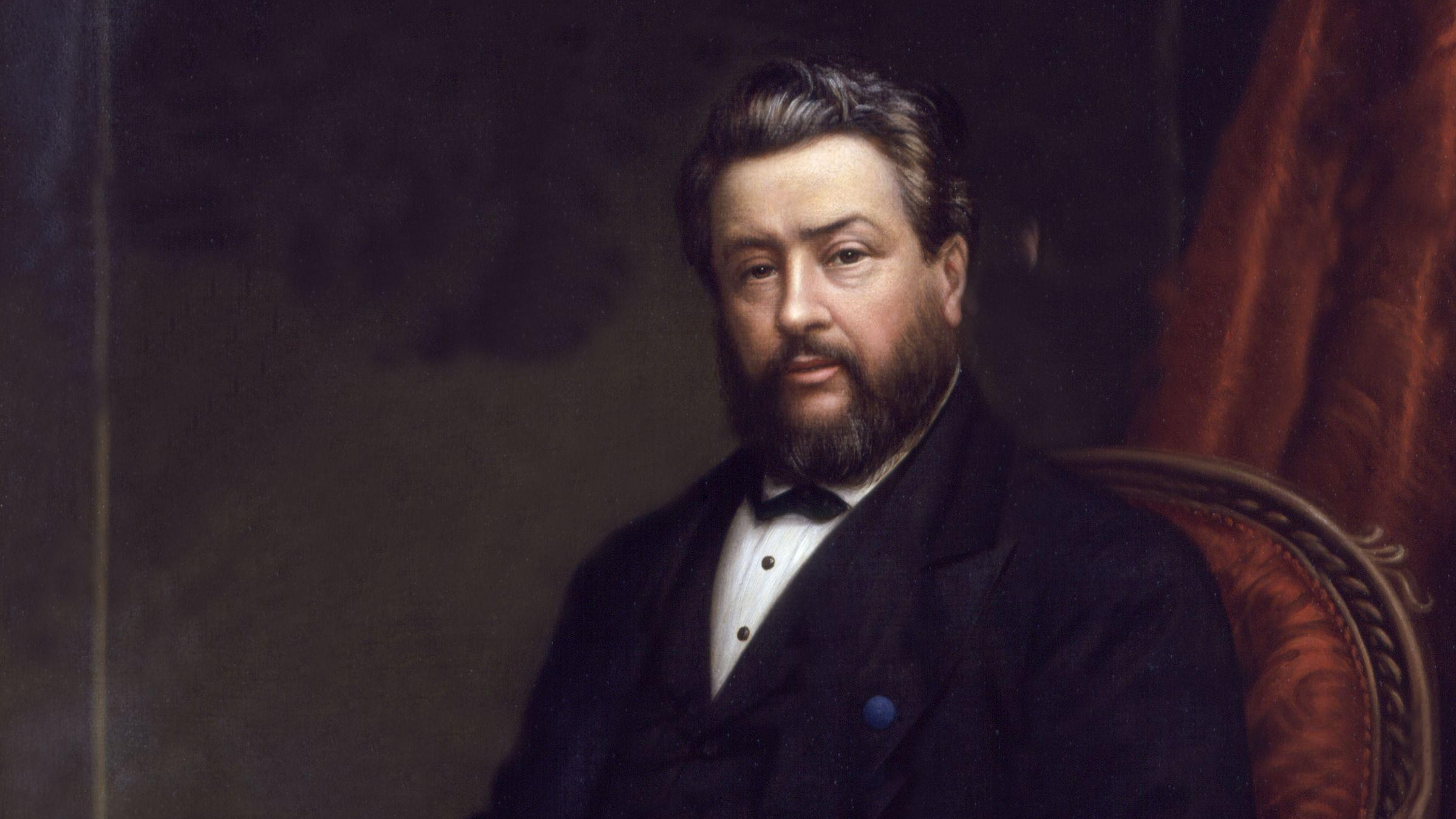
Charles Spurgeon is one of the most influential Baptist preachers ever and continues to be. He is titled by his admirers as being the “prince of preachers.” The staunch stance that most Baptists make today about baptism is contrasting to the teachings of past Baptists especially that of Spurgeon. Many today are appalled by anyone claiming that baptism is essential yet Spurgeon did. Baptists today have their position on baptism as not being essential to salvation like Charles Stanley and Ray Comfort with Kirk Cameron. On October 13, 1889, Charles Spurgeon said in his lesson “He that Believes and is Baptized shall be Saved” addressing the common discussion about baptism being essential,
“What do you mean by ‘nonessential’? ‘I mean that I can be saved without being baptized.’ Will you dare to say that wicked sentence over again? ‘I mean that I can be saved without being baptized.’ You mean creature! So you will do nothing that Christ commands, if you can be saved without doing it? You are hardly worth saving at all! A man who always wants to be paid for what he does, whose one idea of religion is that he will do what is essential to his own salvation, only cares to save his own skin, and Christ may go where he likes. Clearly, you are no servant of his; you need to be saved from such a disreputable, miserable state of mind; and may the Lord save you! Oftentimes, I do believe that this little matter of believers’ baptism is the test of the sincerity of our profession of love to him” (emp. added).
It is abundantly clear that Spurgeon thought that baptism was essential to salvation and essential to loving Christ. Some may wonder here, “Then, does Charles Spurgeon contradict his lesson on ‘Baptismal Regeneration’ for being a false teaching?” He does not. His lesson on Baptismal Regeneration was dealing with the teachings of the Church of England and no other churches. Spurgeon says clearly in his famous lesson on “Baptismal Regeneration” (June 5, 1864),
“I am not aware that any Protestant Church in England teaches the doctrine of baptismal regeneration except one, and that happens to be the corporation which with none too much humility calls itself the Church of England. This very powerful sect does not teach this doctrine merely through a section of its ministers, who might charitably be considered as evil branches of the vine, but it openly, boldly, and plainly declares this doctrine in her own appointed standard, the Book of Common Prayer, and that in words so express, that while language is the channel of conveying intelligible sense, no process short of violent wresting from their plain meaning can ever make them say anything else” (emp. added).
What was Spurgeon referring to by “Baptismal Regeneration”?! Spurgeon refuted the practice of baptizing unbelievers and specifically the baptizing of infants. In the same lesson, Spurgeon said,
“I find that the great error which we have to contend with throughout England (and it is growing more and more), is one in direct opposition to my text, well known to you as the doctrine of baptismal regeneration. We will confront this dogma with the assertion, that BAPTISM WITHOUT FAITH SAVES NO ONE. The text says, ‘He that believeth and is baptized shall be saved;’ but whether a man be baptized or no, it asserts that ‘he that believeth not shall be damned:’ so that baptism does not save the unbeliever, nay, it does not in any degree exempt him from the common doom of all the ungodly” (emp. added).
Spurgeon was addressing the teaching and practice of the Church of England to baptize infants, unbelievers. This is why he addressed “baptism without faith” as “baptismal regeneration,” because the Church of England was baptizing unbelievers, who were to be saved without faith and essentially no understanding of the Gospel. Spurgeon was right that baptizing unbelievers is not in the Bible and not taught by Jesus. Baptizing little children contradicts the words of Jesus (Mark 16:16; cf. Matt 19:14). Spurgeon was not addressing those who believed that baptism was the faithful moment of regeneration (1 Cor 6:11; Titus 3:5; cf. John 3:5).
Now, Spurgeon emphasized faith, and faith being essential to salvation. Many today especially Baptists separate faith from baptism being essential to salvation. Spurgeon did not. Charles Spurgeon showed that that faith and baptism are connected. Referring to Jesus’ words on baptism in Mark 16:16, Spurgeon said in his lesson on “Baptismal Regeneration,”
“THE BAPTISM IN THE TEXT IS ONE EVIDENTLY CONNECTED WITH FAITH. ‘He that believeth and is baptized shall be saved.’ It strikes me, there is no supposition here, that anybody would be baptized who did not believe; or, if there be such a supposition, it is very clearly laid down that his baptism will be of no use to him, for he will be damned, baptized or not, unless he believes. The baptism of the text seems to me—my brethren, if you differ from me I am sorry for it, but I must hold my opinion and out with it—it seems to me that baptism is connected with, nay, directly follows belief. I would not insist too much upon the order of the words, but for other reasons, I think that baptism should follow believing” (emp. added).
Now, some might still want to avoid baptism in Spurgeon’s statement without its context, which Spurgeon stated, “The text says, ‘He that believeth and is baptized shall be saved;’ but whether a man be baptized or no, it asserts that ‘he that believeth not shall be damned’.” Spurgeon is certainly not contradicting his words here from before about baptism being essential, nor was Jesus for that matter. He is quoting the words of Christ from Mark 16:16, “He that believeth and is baptized shall be saved; but he that believeth not shall be damned.”
In response to those who want to leave out baptism from salvation, Spurgeon responds to them clearly in his lesson “He that Believeth and is Baptized Shall be Saved” (October 13, 1889) saying,
“Please observe that I did not make the text. Perhaps, if I had made it, I should have left out that piece about baptism; but I have had no hand in making the Bible, I am obliged to take God’s Word as I find it, and here I read these words of our Lord Jesus Christ, ‘He that believeth and is baptized shall be saved.’ ‘Do not dwell on the baptism,’ says one; ‘leave that out.’ That is what you say, my dear Sir; I cannot see your face, but I do not believe that you are my master. My Master is the Lord who taught holy men to write this Book, and I can only go by the Book; the Book has the baptism in it, so I must stick to the truth as it is in the Book: ‘He that believeth and is baptized shall be saved.’” (emp. added).
Spurgeon’s belief in baptism for salvation cannot be any clearer. Despite the clear teachings of Christ regarding the necessity of the baptism to salvation, some will boldly proclaim that they need not obey baptism to be saved. Some say that all they need is faith. See what Spurgeon said in response to this from his lesson “Baptismal Regeneration.”
“Again, baptism is also Faith’s taking her proper place. It is, or should be one of her first acts of obedience. Reason looks at baptism, and says, ‘Perhaps there is nothing in it; it cannot do me any good.’ ‘True,’ says Faith, ‘and therefore will I observe it. If it did me some good my selfishness would make me do it, but inasmuch as to my sense there is no good in it, since I am bidden by my Lord thus to fulfil all righteousness, it is my first public declaration that a thing which looks to be unreasonable and seems to be unprofitable, being commanded by God, is law, is law to me.”
Why do so many especially Baptists today cast aside baptism in Jesus’ name as not being necessary and even unnecessary and unreasonable? It is clear that it is the end result of accepting faith alone, which is to assume that baptism is a work of law and boasting rather than a work of faith and being the exact moment of acting faith when Jesus saves. To see Spurgeon’s confusion in dealing with the Baptismal Regeneration and combating the flawed teachings of the Church of England, Spurgeon puts salvation before being buried and raised with Christ as seen in reading his other words from his lesson on “Baptismal Regeneration,”
“At any rate it effectually avoids the error we have been combating. A man who knows that he is saved by believing in Christ does not, when he is baptized, lift his baptism into a saving ordinance. In fact, he is the very best protester against that mistake, because he holds that he has no right to be baptized until he is saved. He bears a testimony against baptismal regeneration in his being baptized as professedly an already regenerate person. Brethren, the baptism here meant is a baptism connected with faith, and to this baptism I will admit there is very much ascribed in Scripture. Into that question I am not going; but I do find some very remarkable passages in which baptism is spoken of very strongly. I find this—‘Arise, and be baptized, and wash away thy sins, calling on the name of the Lord.’ I find as much as this elsewhere; I know that believer’s baptism itself does not wash away sin, yet it is so the outward sign and emblem of it to the believer, that the thing visible may be described as the thing signified. Just as our Saviour said—‘This is my body,’ when it was not his body, but bread; yet, inasmuch as it represented his body, it was fair and right according to the usage of language to say, ‘Take, eat, this is my body.’ And so, inasmuch as baptism to the believer representeth the washing of sin—it may be called the washing of sin—not that it is so, but that it is to saved souls the outward symbol and representation of what is done by the power of the Holy Spirit, in the man who believes in Christ.”
Here we see the common Baptist belief that survives to this day that the Holy Spirit changes the unbelieving man’s heart to believe. Where is this belief in the Scriptures? Ir cannot be found. Also, for Baptists and even Spurgeon, one’s initial belief is the time of one’s regeneration, or in other words, the exact moment of salvation. See, Spurgeon was right that someone cannot be saved at baptism being a unbeliever because it is not possible to be saved without faith; and on the other hand, Spurgeon is wrong to believe that believers are not saved when rising with Christ from baptism because he believed that they were already saved in believing and had received the Holy Spirit. This is why Spurgeon rejects baptism and why Baptists are generally confused about Jesus’s words in Mark 16:16, because they have already decided that salvation is when one first believes rather than when faith comes to conformation of the Gospel. Though grace is a free gift, we must still faithfully be buried with Christ through baptism. For which, we do not baptize ourselves but someone else immerses us.
How again does Spurgeon differ in belief from Baptists today? Spurgeon believes that baptism is essential to salvation, which is different. Yet, Spurgeon is in agreement with today’s Baptists that baptism is not the moment of regeneration and salvation. There are a few professing to be Christian including Baptists who also believe like Spurgeon today, but these are certainly few. To consider for yourself, whether one is saved at belief or at the faithful act of baptism, read some Scriptures on baptism like Mark 16:16; Acts 2:38; Acts 22:16; Rom 6:3–7; 1 Cor 6:11; Gal 3:26–27; Col 2:12–13; and 1 Pet 3:21. Remember that John’s baptism is different from the baptism that Jesus commanded (Acts 19:1–7).
Are we saved by the death, burial, and resurrection of Jesus Christ? Yes (1 Cor 15:1–4). Are we saved when we are born again through the resurrection of Jesus Christ? Yes (1 Pet 1:3). Are we saved when we baptized through the resurrection? Yes (1 Pet 3:21). See, God raising a believer with Christ from the burial of baptism is not out of our own works (Eph 2:4–9).
The top of our understanding of the being raised with Christ from being buried with Him in baptism. Spurgeon has very clear and truthful statements regarding the obedience to the Gospel by baptism in Romans 6:3–7. In Spurgeon’s lesson, “Baptism – A Burial” (October 30, 1881), he had these things to say to show how baptism is essential to salvation,
“Baptism sets forth the death, burial, and resurrection of Christ, and our participation therein. Its teaching is twofold. First, think of our representative union with Christ, so that when he died and was buried it was on our behalf, and we were thus buried with him. This will give you the teaching of baptism so far as it sets forth a creed. We declare in baptism that we believe in the death of Jesus, and desire to partake in all the merit of it. But there is a second equally important matter and that is our realized union with Christ which is set forth in baptism, not so much as a doctrine of our creed as a matter of our experience. There is a manner of dying, of being buried, of rising, and of living in Christ which must be displayed in each one of us if we are indeed members of the body of Christ.”
“First, then, I want you to think of OUR REPRESENTATIVE UNION WITH CHRIST as it is set forth in baptism as a truth to be believed. Our Lord Jesus is the substitute for his people, and when he died it was on their behalf and in their stead. The great doctrine of our justification lies in this, that Christ took our sins, stood in our place, and as our surety suffered, and bled, and died, thus presenting on our behalf a sacrifice for sin. We are to regard him, not as a private person, but as our representative. We are buried with him in baptism unto death to show that we accept him as being for us dead and buried.”
“His death is the hinge of our confidence: we are not baptized into his example, or his life, but into his death. We hereby confess that all our salvation lies in the death of Jesus, which death we accept as having been incurred on our account.”
 The Breath of God
I think the easiest way to explain the Lutheran position on the necessity of Baptism in God’s plan of saving sinners is this: Baptism is necessary for salvation…except when God allows an exception.
God has ordained that Baptism is the principle “when” of salvation. Salvation outside of Baptism is the exception. If Baptism were the means of Salvation, then the Church of Christ is correct: No baptism… and you die…you go straight to hell.
To the Church of Christ, even if a new believer believes in Christ with all his heart, truly repents of his sins, and sincerely desires to follow Christ…if five minutes later, he is killed crossing the road to go down to the river to be baptized…he will burn for all eternity in hell.
This is pure nonsense!
The Church Catholic has ALWAYS believed that a new believer who desires baptism but dies before he is able to be baptized, WILL go to heaven, IS saved, and will be in heaven.
If the Roman Catholic Church, the Lutheran Church, and the Orthodox Church believed that Baptism is absolutely mandatory, no exceptions…we would not require catechism classes (Christian instruction) prior to Baptism, we would baptize them immediately when they professes to us their faith in Christ, for fear that if we wait, and the person dies or is killed, he/she will go straight to hell.
Lutherans teach that God saves in Baptism, by the power of his Word, in and through the water. God doesn’t save in Baptism because YOU or your parents decided to be baptized. God doesn’t save in Baptism because your parents are Christians and therefore you inherit salvation. God saves in Baptism because that is the time and place that HE has chosen to save sinners. The word “baptism” or one of its variations is mentioned more than 100 times in the NT. Baptism seems to be very important to God for him to speak of it so often. The term “born again” is only mentioned twice. “Accept Christ”, “Make a decision for Christ”, and “Ask Jesus into your heart” are never mentioned.
The means of salvation has always been by the power of God’s Word/his declaration of righteousness. That is how he saved in the OT, and that is how he saves today. Baptism is the principle “when” of salvation, not the “how”.
Again, we do not believe that any believer could die like this.
Also, believers, who repent, are to be baptized (Mark 16:16, Acts 2:38).
Why sprinkle for the burial in baptism? Even the Roman Catholic Church mostly immersed until the 13th c.
Are you saying that God would never allow someone to believe and not make it to the baptismal tank before he died?
God desires that all be saved (1 Tim. 2:4, 2 Pet. 3:9). So, how could anyone die on their way to be baptized or to come to believe in Christ?
Why is it that Baptists and evangelicals don’t trust English language Bibles? It seems that any passage of Scripture in an English language Bible that does not agree with Baptist/evangelical doctrine is labeled as mistranslated.
If we all start ripping out Bible verses in our English language Bibles that Baptists and evangelicals assert are incorrectly translated…which is just another way of saying “That’s not really God’s Word” …our Holy Bible would become a Hole-y Bible.
Quite the opposite. You are rejecting the English transliteration. There is a Greek text behind the text that I read. You also are implying that God appointed these to believe. I believe that they were set and appointed unto eternal life, who did believe.
Also, I am a Christian not a Baptist or evangelical. The word “evangelical” comes from the Lutherans, so you confuse me about that.
Your comments reflect a major misconception that evangelicals and the Reformed have of orthodox Christians. Lutherans do not believe that baptism is necessary (mandatory) for salvation. Not even the Roman Catholic Church believes this. All the saints of the Old Testament, the thief on the cross, and thousand of martyrs down through the centuries have been saved without Baptism. Baptism is not the “how” of salvation!
Lutherans believe that baptism is one of several possible “when”s of salvation, it is not the “how” of salvation. The “how” of salvation is and always has been the power of God’s Word/God’s declaration of righteousness.
A sinner can be saved by the power of God’s Word when he hears the Word preached in a church, preached on TV or radio, reading a Gideon’s Bible in a hotel room, or reading a Gospel tract that contains the Word. Salvation is by God’s grace alone, through the power of his Word alone, received in faith alone. In each of these situations, the sinner is saved the instant he or she believes. Baptism is NOT mandatory for salvation to occur.
However, the Bible in multiple passages, also states that God uses his Word to save at the time of Baptism.
It is the work of the Holy Spirit, using the Word of God, that works salvation in the sinner’s spiritually dead soul, according to the second chapters of Ephesians and Colossians, and the third chapter of Romans. Your “decision for Christ” does not save you, neither does your decision to be baptized.
God saves those whom he has elected, at the time and place of his choosing. Sometimes God saves them while hearing a sermon in church, sometimes at home reading the Word, and sometimes by the power of his Word spoken during Baptism.
God does 100% of the saving. The sinner is a passive participant in his salvation. There is no passage in the New Testament that asks sinners to make a decision for Christ. The Bible states that God quickens sinners, gives them faith, and they believe and repent.
The sinner does not decide to be saved. God decides to save the sinner!
Gary
Luther, Baptists, and Evangelicals
Gary (Luther, Baptists and Evangelicals)
You are wrong on many counts. The Roman Catholic Church DOES teach that you need to be baptized to be saved. The Bible teaches BELIEF is what you need to be saved. An infant and a baby are not capable of understanding hence belief is NOT present. You do not inherit salvation through parents. There is not a single infant or baby baptism in the Bible for that reason. Baptism is part of the SALVATION PROCESS for Catholic. Look up and educate yourself on their Sacraments and what they mean.
You do not need to be baptized to be saved. As you mentioned, the thief on the cross wasn’t and I believe Christ when He stated that the thief would be with Him in paradise. However when you have the opportunity to be baptized YOU SHOULD! There are extenuating circumstances where this is not possible but when it is easily possibly, answer this question – why WOULDN’T a person WANT to be baptized? The Bible also states:
Mark 16:16 “He that believeth and is baptized shall be saved; but he that believeth not shall be damned.”
Acts 2:38 “Then Peter said unto them, Repent, and be baptized every one of you in the name of Jesus Christ for the remission of sins, and ye shall receive the gift of the Holy Ghost.”
Again a baby or an infant is not capable of BELIEF or REPENTING. In fact I don’t know of any adult that was infant or baby baptized that even remembers the event.
Romans 6:3-6 “Know ye not, that so many of us as were baptized into Jesus Christ were baptized into his death? Therefore we are buried with him by baptism into death: that like as Christ was raised up from the dead by the glory of the Father, even so we also should walk in newness of life. For if we have been planted together in the likeness of his death, we shall be also in the likeness of his resurrection: Knowing this, that our old man is crucified with him, that the body of sin might be destroyed, that henceforth we should not serve sin.”
“God’s people should be baptized because God commanded it, not because some church requires it.” ~ John R. Rice
God does NOT predetermine who will be baptized or not. Remember the parable about the clay? The clay molder is God,however the clay used has different consistencies. We are the CLAY. We vary by DEGREE of BELIEF. If you offer yourself to God, He will ACCEPT YOU. Some clay is used for fine vases. Some is used for pots – it depends on the consistency. The point it that it is up to the INDIVIDUAL as to what kind of “clay” they are. Whatever kind of “clay” you are, God will WORK with you and make you into something special depending on your consistency. You also have the choice of REJECTING Him. People are the “clay” and God is pottery maker.
The SINNER is the one that decides on BELIEF – not GOD!
John 3:16 For God so loved the world He gave His only begotten Son that who so ever BELIEVES in Him will have eternal life …..
Belief is a CHOICE! God offers the CHOICE to anyone and everyone. God excludes NO ONE from the invitation to BELIEVE. Belief is what motivates followers to REPENT and be baptized. Again, an infant or a baby is not capable of repenting.
“The sinner does not decide to be saved. God decides to save the sinner!”
The sinner DECIDES if they want to be saved. Christ paid our sin debt for us. God does NOT reject sinners that through CHOICE, believe in Him, repent and get baptized. These ACTIONS are CHOICES as well as BELIEF. God lets US CHOOSE.
Gary
Lutherans wear Martin Luther’s name and teach what he taught. You say that “Lutherans do not believe that baptism is necessary (mandatory) for salvation.”
What did Martin Luther have to say on baptism and salvation? Have you read Martin Luther’s Large Catechism? Here is what he says on baptism and salvation: “Likewise in St. Mark 16:16 He that believeth and is baptized shall be saved; but he that believeth not shall be damned. In these words you must note, in the first place, that here stand God’s commandment and institution, lest we doubt that Baptism is divine, not devised nor invented by men. For as truly as I can say, No man has spun the Ten Commandments, the Creed, and the Lord’s Prayer out of his head, but they are revealed and given by God Himself, so also I can boast that Baptism is no human trifle, but instituted by God Himself, moreover, that it is most solemnly and strictly commanded that WE MUST BE BAPTIZED OR WE CANNOT BE SAVED, lest any one regard it as a trifling matter, like putting on a new red coat. For it is of the greatest importance that we esteem Baptism excellent, glorious, and exalted, for which we contend and fight chiefly, because the world is now so full of sects clamoring that Baptism is an external thing, and that external things are of no benefit. But let it be ever so much an external thing, here stand God’s Word and command which institute, establish, and confirm Baptism. But what God institutes and commands cannot be a vain, but must be a most precious thing, though in appearance it were of less value than a straw. If hitherto people could consider it a great thing when the Pope with his letters and bulls dispensed indulgences and confirmed altars and churches, solely because of the letters and seals, we ought to esteem Baptism much more highly and more precious, because God has commanded it, and, besides, it is performed in His name. For these are the words, Go ye, baptize; however, not in your name, but in the name of God.”
I am not dealing with his errors on baptism (such as who should be, etc.) but only the fact that he taught what the Bible teaches about the necessity of baptism for salvation.
Trey
Good point, Trey. Can you cite this source?
Sure. I apologize for doing so. You can view his large catechism online in pdf format at the link below. On the left hand side of the website you will find the large catechism and the outline of it.
http://bookofconcord.org/lc-6-baptism.php
I meant to say I apologize for not doing so to begin with.
You are absolutely correct that Martin Luther and Lutherans today teach that Baptism is necessary for salvation…but it is not absolutely MANDATORY for salvation. Confused? Let me clarify:
Lutherans believe that God saves sinners in Baptism.
Lutherans believe that God washes away sins in Baptism.
Lutherans believe that we “put on Christ” in Baptism.
Lutherans believe that we are “buried with Christ” in Baptism.
But Lutherans do NOT believe that it is OUR act of being baptized that saves us! Lutherans teach that it is the Word of God that saves us (faith comes by hearing and hearing by the Word of God). So if it is the Word of God, spoken or written, that saves lost sinners, the Word CAN save lost sinners outside of Baptism!
This is what Martin Luther taught and this is what (orthodox/conservative) Lutherans still teach today: God saves by his Word, and most often this occurs in Holy Baptism, but God can and does save outside of Baptism, for instance when an adult non-believer hears the Word preached and believes. That adult sinner is saved the minute God quickens his soul, by the power of His Word, through the Holy Spirit, gives him the gift of faith, creating belief. If this new believer is then killed or dies before having the opportunity to fulfill his desire to follow Christ’s command to be baptized, he will go to heaven, he is saved, he is a Christian.
It is God’s Word that saves, not magical baptismal water!
The only Christian denomination who insists that baptism is absolutely mandatory for salvation is the Church of Christ. Even the Roman Catholic Church teaches that although God has ordained baptism as the principle “when” of salvation, God can and does save without Baptism. If you don’t believe me I can give you a link to a statement on this subject by the RCC.
The Lutheran Church teaches exactly what Christ says in Mark 16:16. He that believes and is baptized will be saved, but he that does not believe will be damned.
It is not the lack of baptism that damns, it is the lack of belief that damns. A true believer WILL be baptized, unless prevented by death. The person who states that he is a believer but ignores, rejects, and/or despises Baptism should be warned that his soul is in grave danger! The refusal to be baptized may signal he lacks true faith. He needs to repent and be baptized, as Peter commands in Acts chapter 2.
Gary I guess you missed it and I even put Luther’s words in all caps so you wouldn’t but I guess you glossed right over it. He said “..that it is most solemnly and strictly commanded that WE MUST BE BAPTIZED OR WE CANNOT BE SAVED…” So is he contradicting what Lutherans teach today or did he contradict himself somewhere else in his teachings? Those words seem pretty straightforward to me “WE MUST BE BAPTIZED OR WE CANNOT BE SAVED”.
I am confused as to why Lutherans baptize babies. You say “Lutherans teach that it is the Word of God that saves us (faith comes by hearing and hearing by the Word of God).” How did the baby develop faith by hearing the Word of God?
I found this on the website I included below. It is from a Lutheran website. They say “If infants die before they believe in Jesus, they will be eternally condemned. They, like everyone else, need to be baptized so that they can be born again. Jesus said, “unless one is born of water and the Spirit, he cannot enter the kingdom of God” (John 3:5). We believe that baptism is God’s special means of grace for children by which He causes them to be born again. To keep them from baptism is to keep them from forgiveness and to endanger them with damnation.” Again how does an infant believe in Jesus? What sins did the infant commit?
http://www.orlutheran.com/html/trinfbap.html
Great point. I am curious about this as well.
We Lutherans love it when Baptists, evangelicals, (and the Church of Christ) quote Luther. They usually pull out a small statement and make Luther sound as if he agrees with their teachings, only to find out that we Lutherans really do teach what Luther believed at the time of his death. The Lutheran Church has not invented non-Luther teachings. I’m going to let Luther speak for himself. Here he is further along in the Large Catechism:
To Top
1
2
3
4
5
6
7
The Large Catechism
<>
To link here use http://bocl.org?LC+IV. You can go to a specific paragraph using http://bocl.org?LC+IV+12
Holy Baptism
1] We have now finished the three chief parts of the common Christian doctrine. Besides these we have yet to speak of our two Sacraments instituted by Christ, of which also every Christian ought to have at least an ordinary, brief instruction, because without them there can be no Christian; although, alas! hitherto no instruction concerning them has been given. 2] But, in the first place, we take up Baptism, by which we are first received into the Christian Church. However, in order that it may be readily understood, we will treat of it in an orderly manner, and keep only to that which it is necessary for us to know. For how it is to be maintained and defended against heretics and sects we will commend to the learned.
3] In the first place, we must above all things know well the words upon which Baptism is founded, and to which everything refers that is to be said on the subject, namely, where the Lord Christ speaks in Matthew 28:19:
4] Go ye therefore and teach all nations, baptizing them in the name of the Father, and of the Son, and of the Holy Ghost.
Likewise in St. Mark 16:16: 5] He that believeth and is baptized shall be saved; but he that believeth not shall be damned.
6] In these words you must note, in the first place, that here stand God’s commandment and institution, lest we doubt that Baptism is divine, not devised nor invented by men. For as truly as I can say, No man has spun the Ten Commandments, the Creed, and the Lord’s Prayer out of his head, but they are revealed and given by God Himself, so also I can boast that Baptism is no human trifle, but instituted by God Himself, moreover, that it is most solemnly and strictly commanded that we must be baptized or we cannot be saved, lest any one regard it as a trifling matter, like putting on a new red coat. 7] For it is of the greatest importance that we esteem Baptism 8] excellent, glorious, and exalted, for which we contend and fight chiefly, because the world is now so full of sects clamoring that Baptism is an external thing, and that external things are of no benefit. But let it be ever so much an external thing, here stand God’s Word and command which institute, establish, and confirm Baptism. But what God institutes and commands cannot be a vain, but must be a most precious thing, though in appearance it were of less value than a straw. 9] If hitherto people could consider it a great thing when the Pope with his letters and bulls dispensed indulgences and confirmed altars and churches, solely because of the letters and seals, we ought to esteem Baptism much more highly and more precious, because God has commanded it, and, besides, it is performed in His name. For these are the words, Go ye, baptize; however, not in your name, but in the name of God.
10] For to be baptized in the name of God is to be baptized not by men, but by God Himself. Therefore, although it is performed by human hands, it is nevertheless truly God’s own work. From this fact every one may himself readily infer that it is a far higher work than any work performed by a man or a saint. For what work greater than the work of God can we do?
11] But here the devil is busy to delude us with false appearances, and lead us away from the work of God to our own works. For there is a much more splendid appearance when a Carthusian does many great and difficult works; and we all think much more of that which we do and merit ourselves. 12] But the Scriptures teach thus: Even though we collect in one mass the works of all the monks, however splendidly they may shine, they would not be as noble and good as if God should pick up a straw. Why? Because the person is nobler and better. Here, then, we must not estimate the person according to the works, but the works according to the person, from whom they must derive their nobility. 13] But insane reason will not regard this, and because Baptism does not shine like the works which we do, it is to be esteemed as nothing.
14] From this now learn a proper understanding of the subject, and how to answer the question what Baptism is, namely thus, that it is not mere ordinary water, but water comprehended in God’s Word and command, and sanctified thereby, so that it is nothing else than a divine water; not that the water in itself is nobler than other water, but that God’s Word and command are added.
15] Therefore it is pure wickedness and blasphemy of the devil that now our new spirits, to mock at Baptism, omit from it God’s Word and institution, and look upon it in no other way than as water which is taken from the well, and then blather and say: How is a handful of water to help the soul? 16] Aye, my friend, who does not know that water is water if tearing things asunder is what we are after? But how dare you thus interfere with God’s order, and tear away the most precious treasure with which God has connected and enclosed it, and which He will not have separated? For the kernel in the water is God’s Word or command and the name of God, which is a treasure greater and nobler than heaven and earth.
17] Comprehend the difference, then, that Baptism is quite another thing than all other water; not on account of the natural quality but because something more noble is here added; for God Himself stakes His honor, His power and might on it. Therefore it is not only natural water, but a divine, heavenly, holy, and blessed water, and in whatever other terms we can praise it,-all on account of the Word, which is a heavenly, holy Word, that no one can sufficiently extol, for it has, and is able to do, all that God is and can do [since it has all the virtue and power of God comprised in it]. 18] Hence also it derives its essence as a Sacrament, as St. Augustine also taught: Accedat verbum ad elementum et fit sacramentum. That is, when the Word is joined to the element or natural substance, it becomes a Sacrament, that is, a holy and divine matter and sign.
19] Therefore we always teach that the Sacraments and all external things which God ordains and institutes should not be regarded according to the coarse, external mask, as we regard the shell of a nut, but as the Word of God is included therein. 20] For thus we also speak of the parental estate and of civil government. If we propose to regard them in as far as they have noses, eyes, skin, and hair, flesh and bones, they look like Turks and heathen, and some one might start up and say: Why should I esteem them more than others? But because the commandment is added: Honor thy father and thy mother, I behold a different man, adorned and clothed with the majesty and glory of God. The commandment (I say) is the chain of gold about his neck, yea, the crown upon his head, which shows to me how and why one must honor this flesh and blood.
21] Thus, and much more even, you must honor Baptism and esteem it glorious on account of the Word, since He Himself has honored it both by words and deeds; moreover, confirmed it with miracles from heaven. For do you think it was a jest that, when Christ was baptized, the heavens were opened and the Holy Ghost descended visibly, and everything was divine glory and majesty?
22] Therefore I exhort again that these two, the water and the Word, by no means be separated from one another and parted. For if the Word is separated from it, the water is the same as that with which the servant cooks, and may indeed be called a bath-keeper’s baptism. But when it is added, as God has ordained, it is a Sacrament, and is called Christ-baptism. Let this be the first part, regarding the essence and dignity of the holy Sacrament.
23] In the second place, since we know now what Baptism is, and how it is to be regarded, we must also learn why and for what purpose it is instituted; that is, what it profits, gives, and works. And this also we cannot discern better than from the words of Christ above quoted: He that believeth and is baptized shall be saved. 24] Therefore state it most simply thus, that the power, work, profit, fruit, and end of Baptism is this, namely, to save. For no one is baptized in order that he may become a prince, but, as the words declare, that he be saved. 25] But to be saved, we know, is nothing else than to be delivered from sin, death, and the devil, and to enter into the kingdom of Christ, and to live with Him forever.
26] Here you see again how highly and precious we should esteem Baptism, because in it we obtain such an unspeakable treasure, which also indicates sufficiently that it cannot be ordinary mere water. For mere water could not do such a thing, but the Word does it, and (as said above) the fact that the name of God is comprehended therein. 27] But where the name of God is, there must be also life and salvation, that it may indeed be called a divine, blessed, fruitful, and gracious water; for by the Word such power is imparted to Baptism that it is a laver of regeneration, as St. Paul also calls it, Titus 3:5.
28] But as our would-be wise, new spirits assert that faith alone saves, and that works and external things avail nothing, we answer: It is true, indeed, that nothing in us is of any avail but faith, as we shall hear still further. 29] But these blind guides are unwilling to see this, namely, that faith must have something which it believes, that is, of which it takes hold, and upon which it stands and rests. Thus faith clings to the water, and believes that it is Baptism, in which there is pure salvation and life; not through the water (as we have sufficiently stated), but through the fact that it is embodied in the Word and institution of God, and the name of God inheres in it. Now, if I believe this, what else is it than believing in God as in Him who has given and planted His Word into this ordinance, and proposes to us this external thing wherein we may apprehend such a treasure?
30] Now, they are so mad as to separate faith, and that to which faith clings and is bound, though it be something external. Yea, it shall and must be something external, that it may be apprehended by the senses, and understood and thereby be brought into the heart, as indeed the entire Gospel is an external, verbal preaching. In short, what God does and works in us He proposes to work through such external ordinances. Wherever, therefore, He speaks, yea, in whichever direction or by whatever means He speaks, thither faith must look, and to that it must hold. 31] Now here we have the words: He that believeth and is baptized shall be saved. To what else do they refer than to Baptism, that is, to the water comprehended in God’s ordinance? Hence it follows that whoever rejects Baptism rejects the Word of God, faith, and Christ, who directs us thither and binds us to Baptism.
32] In the third place, since we have learned the great benefit and power of Baptism, let us see further who is the person that receives what Baptism gives and profits. 33] This is again most beautifully and clearly expressed in the words: He that believeth and is baptized shall be saved. That is, faith alone makes the person worthy to receive profitably the saving, divine water. For, since these blessings are here presented and promised in the words in and with the water, they cannot be received in any other way than by believing them with the heart. 34] Without faith it profits nothing, notwithstanding it is in itself a divine superabundant treasure. Therefore this single word (He that believeth) effects this much that it excludes and repels all works which we can do, in the opinion that we obtain and merit salvation by them. For it is determined that whatever is not faith avails nothing nor receives anything.
35] But if they say, as they are accustomed: Still Baptism is itself a work, and you say works are of no avail for salvation; what, then, becomes of faith? Answer: Yes, our works, indeed, avail nothing for salvation; Baptism, however, is not our work, but God’s (for, as was stated, you must put Christ-baptism far away from a bath-keeper’s baptism). God’s works, however, are saving and necessary for salvation, and do not exclude, but demand, faith; for without faith they could not be apprehended. 36] For by suffering the water to be poured upon you, you have not yet received Baptism in such a manner that it benefits you anything; but it becomes beneficial to you if you have yourself baptized with the thought that this is according to God’s command and ordinance, and besides in God’s name, in order that you may receive in the water the promised salvation. Now, this the fist cannot do, nor the body; but the heart must believe it.
37] Thus you see plainly that there is here no work done by us, but a treasure which He gives us, and which faith apprehends; just as the Lord Jesus Christ upon the cross is not a work, but a treasure comprehended in the Word, and offered to us and received by faith. Therefore they do us violence by exclaiming against us as though we preach against faith; while we alone insist upon it as being of such necessity that without it nothing can be received nor enjoyed.
38] Thus we have these three parts which it is necessary to know concerning this Sacrament, especially that the ordinance of God is to be held in all honor, which alone would be sufficient, though it be an entirely external thing, like the commandment, Honor thy father and thy mother, which refers to bodily flesh and blood. Therein we regard not the flesh and blood, but the commandment of God in which they are comprehended, and on account of which the flesh is called father and mother; so also, though we had no more than these words, Go ye and baptize, etc., it would be necessary for us to accept and do it as the ordinance of God. 39] Now there is here not only God’s commandment and injunction, but also the promise, on account of which it is still far more glorious than whatever else God has commanded and ordained, and is, in short, so full of consolation and grace that heaven and earth cannot comprehend it. 40] But it requires skill to believe this, for the treasure is not wanting, but this is wanting that men apprehend it and hold it firmly.
41] Therefore every Christian has enough in Baptism to learn and to practise all his life; for he has always enough to do to believe firmly what it promises and brings: victory over death and the devil, forgiveness of sin, the grace of God, the entire Christ, and the Holy Ghost with His gifts. 42] In short, it is so transcendent that if timid nature could realize it, it might well doubt whether it could be true. 43] For consider, if there were somewhere a physician who understood the art of saving men from dying, or, even though they died, of restoring them speedily to life, so that they would thereafter live forever, how the world would pour in money like snow and rain, so that because of the throng of the rich no one could find access! But here in Baptism there is brought free to every one’s door such a treasure and medicine as utterly destroys death and preserves all men alive.
44] Thus we must regard Baptism and make it profitable to ourselves, that when our sins and conscience oppress us, we strengthen ourselves and take comfort and say: Nevertheless I am baptized; but if I am baptized, it is promised me that I shall be saved and have eternal life, both in soul and body. 45] For that is the reason why these two things are done in Baptism, namely, that the body, which can apprehend nothing but the water, is sprinkled, and, in addition, the word is spoken for the soul to apprehend. 46] Now, since both, the water and the Word, are one Baptism, therefore body and soul must be saved and live forever: the soul through the Word which it believes, but the body because it is united with the soul and also apprehends Baptism as it is able to apprehend it. We have, therefore, no greater jewel in body and soul, for by it we are made holy and are saved, which no other kind of life, no work upon earth, can attain.
Let this suffice respecting the nature, blessing, and use of Baptism, for it answers the present purpose.
Of Infant Baptism.
47] Here a question occurs by which the devil, through his sects, confuses the world, namely, Of Infant Baptism, whether children also believe, and are justly baptized. Concerning this we say briefly: 48] Let the simple dismiss this question from their minds, and refer it to the learned. But if you wish to answer, 49] then answer thus:-
That the Baptism of infants is pleasing to Christ is sufficiently proved from His own work, namely, that God sanctifies many of them who have been thus baptized, and has given them the Holy Ghost; and that there are yet many even to-day in whom we perceive that they have the Holy Ghost both because of their doctrine and life; as it is also given to us by the grace of God that we can explain the Scriptures and come to the knowledge of Christ, which is impossible without the Holy Ghost. 50] But if God did not accept the baptism of infants, He would not give the Holy Ghost nor any of His gifts to any of them; in short, during this long time unto this day no man upon earth could have been a Christian. Now, since God confirms Baptism by the gifts of His Holy Ghost, as is plainly perceptible in some of the church fathers, as St. Bernard, Gerson, John Hus, and others, who were baptized in infancy, and since the holy Christian Church cannot perish until the end of the world, they must acknowledge that such infant baptism is pleasing to God. For He can never be opposed to Himself, or support falsehood and wickedness, or for its promotion impart His grace and Spirit. 51] This is indeed the best and strongest proof for the simple-minded and unlearned. For they shall not take from us or overthrow this article: I believe a holy Christian Church, the communion of saints.
52] Further, we say that we are not so much concerned to know whether the person baptized believes or not; for on that account Baptism does not become invalid; but everything depends upon the Word and command of God. 53] This now is perhaps somewhat acute, but it rests entirely upon what I have said, that Baptism is nothing else than water and the Word of God in and with each other, that is, when the Word is added to the water, Baptism is valid, even though faith be wanting. For my faith does not make Baptism, but receives it. Now, Baptism does not become invalid even though it be wrongly received or employed; since it is not bound (as stated) to our faith, but to the Word.
54] For even though a Jew should to-day come dishonestly and with evil purpose, and we should baptize him in all good faith, we must say that his baptism is nevertheless genuine. For here is the water together with the Word of God, even though he does not receive it as he should, just as those who unworthily go to the Sacrament receive the true Sacrament, even though they do not believe.
55] Thus you see that the objection of the sectarians is vain. For (as we have said) even though infants did not believe, which, however, is not the case, yet their baptism as now shown would be valid, and no one should rebaptize them; just as nothing is detracted from the Sacrament though some one approach it with evil purpose, and he could not be allowed on account of his abuse to take it a second time the selfsame hour, as though he had not received the true Sacrament at first; for that would mean to blaspheme and profane the Sacrament in the worst manner. How dare we think that God’s Word and ordinance should be wrong and invalid because we make a wrong use of it?
Gary, What about the fact that regeneration and being born again is when we are raised with Christ from being buried with Him in baptism (Eph. 2:4-6, Col. 2:12-13)? That is the position of the churches of Christ. God desires that all be saved (1 Tim. 2:4, 2 Pet. 3:9). So, how could anyone die on their way to be baptized? That is like a man, who comes to believe in God and decides to read John’s Gospel to consider Christ, and God allows him to die when he would have believed. Would God allow that person to die before believing in Christ when God knows that he would believe by reading the Gospel? Dying with faith before baptism is a strange hypothetical scenario that one would accept, who lacks faith in God.
So to summarize what Luther said in this first section of the Large Catechism is this:
1. Baptism IS necessary for salvation ( I will comment on this later)
2. Faith is the receptacle of salvation, it is not something that the sinner produces in and of himself to “accept God”. YOUR faith, YOUR belief does NOT initiate, work, or complete salvation. Your belief is a reaction to God’s saving work. Salvation is not a result of your decision to believe.
3. The Christian Church has always taught that infant baptism is valid. Although Luther believed that infants can and do believe, he clearly states that belief is not a necessary prerequisite or work that the infant or adult must perform in order for God to save him. God creates belief when he saves by the power of his Word.
Baptists, evangelicals and the Church of Christ have put the cart before the horse: Belief comes as a RESULT of God’s free gift of salvation, not before.
If someone tells you that they have a free gift for you, is the free gift yours only AFTER you make a decision to open the package? No. The free gift is yours when the giver said it was yours, before you had a chance to even say whether you wanted it or not.
Salvation is so free that it is a stumbling block to the world. But it really is true: God gives salvation based on NOTHING you do or any quality you possess. THAT is a free gift! THAT is the definition of unconditional love!
Gary
There are still many contradictions in what Lutherans teach. You said in several places on here that “Salvation occurs by only one means: the power of God’s declaration of righteousness/the power of his Word. “Faith comes by hearing and hearing by the Word of God.”” Then you and Luther say that infants “can and do believe”.
How is it that infants obtain faith by hearing God’s Word? How do you know that they have faith? Do they tell you? Do you see that their faith is made complete by what they do (James 2:22)? Are infants justified by what they do and not by faith alone (James 2:24)? Or is their faith a dead faith like James describes in James 2:26 “…faith without deeds is dead.”?
Luther also said “Now, Baptism does not become invalid even though it be wrongly received or employed; since it is not bound (as stated) to our faith, but to the Word.
54] For even though a Jew should to-day come dishonestly and with evil purpose, and we should baptize him in all good faith, we must say that his baptism is nevertheless genuine. For here is the water together with the Word of God, even though he does not receive it as he should, just as those who unworthily go to the Sacrament receive the true Sacrament, even though they do not believe.” So what you and Luther are saying is that a person who does not believe in God or His Son, who does not believe that Jesus was raised from the dead can be baptized and it would be valid? That he would receive all of the benefits of that baptism? Is that what you and Luther say? Think on that before you answer and be honest about it. You have said on here that “Lutherans believe that God saves sinners in Baptism. Lutherans believe that God washes away sins in Baptism. Lutherans believe that we “put on Christ” in Baptism. Lutherans believe that we are “buried with Christ” in Baptism.” So an unbelieving person who does not believe in God or His Son will receive as you say “salvation, their sins washed away, put on Christ, and be buried with Christ” even though they do not believe in Christ?
I am saying that when they were baptized with the Holy Spirit they were at the very same time indwelt by the Spirit.
Prove that they received the Holy Spirit after their water baptism.
You’re saying that the Corinthians were baptized into the body by the Spirit and then the Holy Spirit dwelt in them later (1 cor. 12:13)? Or that the Corinthians were sanctified and justified by the Spirit when washed in Jesus’ name and then the Spirit and Christ would abide in them later (1 Cor. 6:11)?
For a narrative description, Acts 8:29: the Holy Spirit appears after the Ethiopian “came up out of the water”. However, I have a feeling this will not satisfy you either. And, it falls under the same category of Acts being a transitional book. Therefore, we have to look to biblical doctrine expressed in the epistles. When we look at that, Romans 6:3-4, 1 Peter 3:21, and Titus 3:4-7 should be clear.
The reason why there are so many denominational differences is because people infer certain conclusions from Scripture and make doctrine according to these inferences. I am trying to harmonize Scripture; not subjugate some to others.
Salvation is actually a much simpler event that what many evangelicals make it out to be. Lutherans believe that salvation occurs solely due to the will and work of God. The sinner is a passive participant in his salvation. The sinner DOES nothing.
The Lutheran interpretation of Scripture on the Doctrine of Justification/Salvation is often confusing to evangelicals. Why? Because understanding or not understanding the Lutheran position depends upon your world view.
Most Christian evangelicals, and all other world religions, come from the viewpoint that: “I must do SOMETHING for God to love me and want to save me! I can’t believe that God would just give me his love, his grace, his mercy, his peace, his forgiveness AND eternal life…based on absolutely nothing that I do. Can it really be true that God gives me all that, in addition to the fact that he gave his only Son to die for me…not based on any good quality, trait, or deed that I can provide to earn his good favor, and not even based on me making a decision that I want his gift??
That is INCOMPREHENSIBLE, illogical, unreasonable, and makes no sense!
But that is what the Bible says that God does: He gives us the free gift of salvation based on his love for us …alone.
“But God shows his love for us in that while we were still sinners, Christ died for us.”
So if you are able to remove YOU from the act of salvation, here is how the Bible says that GOD does it:
Salvation occurs by only one means: the power of God’s declaration of righteousness/the power of his Word. “Faith comes by hearing and hearing by the Word of God.”
In the New Testament, God says that he uses his Word to save and forgive sins in two situations: when the Word is preached, and when the Word is spoken with the application of water…Baptism.
It’s that simple.
Who do Lutherans baptize? Answer: We baptize anyone who comes to us, or is brought to us, seeking God’s free gift of salvation and the forgiveness of sins. Do you have to be baptized to be saved? No. But why would you refuse this beautiful act of God? Why would you refuse God’s gift of the forgiveness of your sins?
If you neglect, reject or despise this command of Christ, do you really have true faith?
As Christ says in Mark 16:16, it is not the lack of baptism that damns, it is the lack of belief/the lack of true faith that damns.
Yes, but baptism is the result of faith in Mark 16:16. Also, a believer does do something when one believes (John 6:28-29). A believer is saved by grace and God’s working when raised with Christ from being buried with Christ in baptism (Eph. 2:4-6, Col. 2:12-13). Baptism is a necessary part of true faith and salvation.
You are correct that the sinner must believe. We are in full agreement on that point. But here is the issue. Is believing something that the sinner accomplishes by making a free will decision to do so, or does the sinner believe because God places the free gift of salvation, the whole “package” of salvation: faith, belief, repentance, the forgiveness of sins and eternal life directly into his soul WITHOUT the sinner’s assistance?
The Bible says that sinners are spiritually dead. Dead men are incapable of making decisions.
Sinners DO believe when they are converted. But they believe as an act of God…not based on them making a correct “decision for Christ”, which is a good deed, a good work…and Scripture clearly states that good works, including good decisions, cannot save us.
I have honestly considered these points, but I had to reject them in light on the Scriptures.
You imply God’s sovereignty over man having free-will. Yet, throughout the Scriptures, we are persuaded and commanded to believe. Those who love God are predestined (Rom. 8:28-30). We are commanded to make our election sure (2 Pet. 1:10). God desires that all repent and be saved (1 Tim. 2:4, 2 Pet. 3:9). God has set every nation and their times and boundaries to seek and find Him (Acts 17:26-27).
God’s Word comes into our heart by hearing the Word (Rom. 10:17). The natural person cannot understand these revelations of the Spirit (1 Cor. 2:14). This does not necessitate that everyone cannot understand without regeneration, but that those using natural wisdom cannot come to know the wisdom of the Spirit. Yet, God must reveal the Truth about spiritual things outside of natural philosophy through His Spirit.
You are again correct that sinners MUST believe, but you will not find one passage of Scripture that states that the sinner must make a “decision” to believe. The sinner must believe, but it is God who makes the decision for him to believe.
Acts 13:48 “…and as many as were appointed to believe, believed.”
This passage points out the great fallacy of Baptist and evangelical theology: The sinner does not assist or even cooperate in his salvation. The sinner is a passive participant in his salvation. Yes, he believes, but he believes because he was appointed before the world existed to believe, not because HE makes a free will decision to do so.
God chooses who will believe…the sinner chooses to reject Christ and send himself to hell. Christ died for all and desires all to be saved. God has predestined NO ONE to hell. The Calvinists are dead wrong.
Check your Greek on Acts 13:48. A simple transliteration would not make such a translation. A simple transliteration is “they were glorifying the word of the Lord and as many as believed were appointed into eternal life.”
Oh, I see that you do believe that the sinner chooses to reject Christ or not. See, I am confused about your beliefs. Please, present some more scriptures.
Throughout the Scriptures, from Christ through the Apostles, sinners are commanded to believe. Christ even gave evidence to believe in John 5.
Honestly, I believe in an understanding using all of these Scriptures. We choose to believe and God has made us to choose to believe, but not against our will. I believe my scriptures still stand as presented previously.
Phil, Ephesians 4:5: “One Lord, one faith, one baptism”. There is one baptism; not two. Scripture does not separate baptism into spiritual at one time and physical at another. Acts is a transitional book where the Holy Spirit comes upon different groups of people in different ways. When the Holy Spirit came to the Samaritans, it was during the “laying of hands” by the apostle Peter. But, few today would say that “laying of hands” is necessary for the indwelling of the Holy Spirit. Therefore, just as in Acts 10, when the Holy Spirit comes to a new branch of Israel grafted in, it is a unique experience in scripture. You err in that you are making the exception, the rule.
Amen.
Nathan,
How could what happened in Acts 10 be “the exception” when there is not one clear cut case of any Gentile receiving the Holy Spirit after their water baptism?
It seems to be convenient to make exceptions when it doesn’t fit the theology one buys into. For Nathan to say that I err in this instance doesn’t surprise me. And it comes from a legalistic mindset, which is an erroneous way to use the NT.
Except for the Corinthians (1 Cor. 1:11-13, 6:11, 10:1-2ff, 12:13)
Water is physical. Christ is Spiritual. You hopefully get the connection, but I wonder….
Interesting that those who were baptized in Acts 10:47 had received the gift of the Holy Spirit prior to water baptism. Your theology teaches that the Holy Spirit is not received until after water baptism. What would be your response to this?
“Water is physical. Christ is Spiritual. You hopefully get the connection, but I wonder…???” What way of arguing is this? Christ Jesus rubbed spit and mud together and placed it on a blind man’s eyes. Christ is Spiritual, mud is physical. Christ Himself was baptized in the River Jordan by John the Baptist. Christ is spiritual, water is physical. Phil, you obviously are not at peace with your beliefs to have to resort to such uncharitable and poorly thought out arguments. “but I wonder…” give me a break! If you really have the truth than you would be at peace to present it effectively without resorting to a condescending comment like that one!
Scott, You are assuming that this baptism is referring to water baptism in these verses. Christ is Spirit so why wouldn’t it be Spirit baptism that puts one into Christ the Spirit? You seem to promote the physical practices as if it is that which determines our salvation. the New covenat is founded in Spiritual principles and not physical, which is superficial in nature. The Catholics do the same. Your missing something essential here.
2 Corinthians 3:6
He has made us competent as ministers of a new covenant—not of the letter but of the Spirit; for the letter kills, but the Spirit gives life.
As you know Phil, Jesus established baptism in His name (Matt. 28:19) for believers (Mark 16:16), who have repented (Acts 2:38), which is a burial in water (Acts 10:47-48).
“Not everyone who says to Me, ‘Lord, Lord,’ shall enter the kingdom of heaven, but he who does the will of My Father in heaven” (Matt. 7:21).